
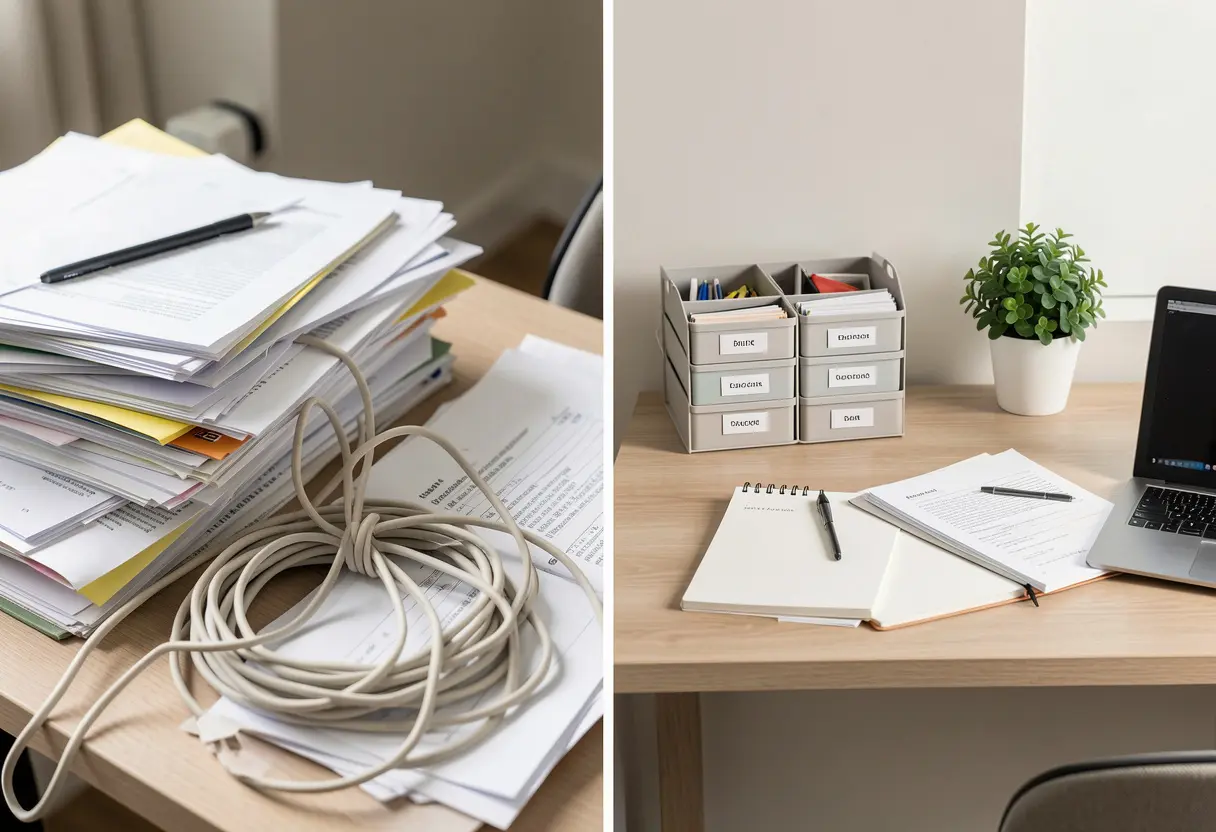
A cluttered environment often leads to a cluttered mind. When your surroundings are filled with unnecessary items, disorganization, or visual noise, your brain is constantly processing “unfinished signals.” This can quietly increase stress levels, reduce focus, and make even simple tasks feel overwhelming. On the other hand, a clean and organized space creates mental clarity, improves decision-making, and supports better productivity throughout the day.
Research in environmental psychology consistently shows that people perform better in tidy, well-structured spaces. Whether it is your bedroom, office desk, or digital workspace, organization directly influences how efficiently you think and work. The good news is that decluttering does not require a massive one-time effort or a complete lifestyle overhaul. With a step-by-step system, you can gradually transform your environment into a space that supports calmness, focus, and efficiency.
This guide will walk you through a practical and sustainable approach to decluttering your home and digital life in a structured way. Instead of feeling overwhelmed, you will learn how to build momentum through small wins, develop lasting habits, and maintain long-term order without stress.
Table of Contents
Step 1: Start Small and Build Momentum
One of the biggest mistakes people make when decluttering is trying to do everything at once. This often leads to burnout and unfinished projects. Instead, the key is to start small.
Choose a single, manageable area such as a desk drawer, a corner of your room, your study table, or even a shelf. The goal is not perfection but progress. When you complete a small area, your brain registers a sense of achievement, which naturally motivates you to continue.
A helpful method is to set a timer for 20 to 30 minutes and focus only on that one space during that time. This removes pressure and creates urgency without overwhelm. Even if you only finish a small section, you are still moving forward, and that progress builds consistency over time.
Small wins are powerful because they shift your mindset from “this is too much” to “this is manageable.”
Step 2: Sort Everything Into Clear Categories
Once you begin decluttering, the next step is to sort items instead of randomly moving them around. A simple and effective method is the “Keep, Donate, Trash” system.
Items that you regularly use, have value, or hold emotional significance should be placed in the Keep category. These are things that actively support your lifestyle and serve a purpose.
Donate items are those that are still in good condition but no longer useful to you. These could be extra clothes, unused stationery, or gadgets you no longer need. Donating helps reduce waste while benefiting others.
Trash items are broken, expired, or unusable things that only take up space. These should be removed immediately to avoid re-cluttering your environment.
For example, when organizing a desk drawer, you might keep essential pens and notebooks, donate extra office supplies you never use, and discard dried markers or broken tools. This structured decision-making prevents confusion and speeds up the decluttering process.
Step 3: Declutter by Zones Instead of the Entire Space
Another effective strategy is to divide your home or workspace into zones rather than tackling everything at once. This method helps you stay organized and prevents mental fatigue.
Your work zone might include your desk, computer, and stationery. Your living zone might include your sofa, coffee table, and décor items. Storage zones include wardrobes, shelves, and cabinets.
Focus on completing one zone fully before moving to the next. This creates a sense of completion and prevents scattered efforts. When one zone is fully organized, it also becomes easier to maintain, giving you visible progress that keeps you motivated.
Zone-based decluttering is especially useful for larger homes or shared spaces because it allows structured control over each area without feeling overwhelmed by the entire environment.
Step 4: Organize What You Decide to Keep
Decluttering is not just about removing items—it is also about organizing what remains. Once you have filtered your belongings, the next step is to arrange them in a logical and accessible way.
Use containers, baskets, or labeled boxes to group similar items together. For example, keep all stationery in one container, chargers in another, and documents in a separate folder. This reduces search time and prevents unnecessary mess in the future.
Placement also matters. Frequently used items should always be placed at eye level or within easy reach. Less frequently used items can be stored in drawers or higher shelves. Vertical stacking is also useful for maximizing limited space, especially in small apartments.
The goal of organization is not just neatness, but functionality. A well-organized space should make your daily routine smoother and more efficient.
Step 5: Build Daily Decluttering Habits
Decluttering is not a one-time activity—it is a continuous habit. Even the most organized space can become messy again if not maintained regularly.
A simple habit is to spend 5 to 10 minutes at the end of each day resetting your space. Put items back in their designated places, clear surfaces, and prepare your environment for the next day.
Another useful habit is the “one-touch rule,” which means handling items only once. If you pick something up, put it in its proper place immediately instead of setting it down temporarily.
Also, avoid bringing unnecessary items into your space. Before purchasing something new, ask yourself whether it truly adds value or simply adds clutter.
When combined with a consistent daily routine, these small habits prevent mess from building up again.
Step 6: Don’t Forget Digital Decluttering
Clutter is not limited to physical spaces. Digital clutter can be just as distracting and mentally draining. A disorganized phone, email inbox, or computer desktop can significantly reduce productivity.
Start by cleaning your desktop and organizing files into clearly labeled folders. Delete unnecessary documents, duplicates, and outdated files.
Unsubscribe from emails that no longer serve you, and regularly clear your inbox by processing messages into categories such as important, archive, or delete.
On your phone, remove unused apps and organize remaining ones into folders. This reduces visual distraction and makes navigation easier.
Digital decluttering creates a more focused mental environment, especially for students and professionals who spend a lot of time on devices.
Step 7: Personalize Your Space with Intention
Once your space is clean and organized, the final step is to personalize it in a meaningful way. A decluttered space does not have to feel empty or lifeless. Instead, it should reflect your personality and support your motivation.
You can add a small indoor plant, motivational quotes, or simple décor items that inspire positivity. Good lighting also plays an important role in creating a comfortable environment.
The key is intentionality. Every item you add should either serve a purpose or bring genuine joy. Avoid filling your space again with unnecessary decorations or impulse purchases.
Minimalism is not about having nothing—it is about having only what truly matters.
Step 8: Maintain Long-Term Consistency
Decluttering becomes truly powerful when it turns into a long-term lifestyle habit rather than a one-time effort. To maintain your progress, schedule a monthly review of your space. Use this time to reassess items, remove new clutter, and reorganize if needed.
Keeping a simple checklist or journal can help track your progress over time. You can also reward yourself after completing larger decluttering sessions to reinforce positive behavior.
Over time, maintaining a clean environment becomes second nature, and the effort required decreases significantly.
Decluttering your space is more than just organizing physical objects—it is a powerful mental reset. When your environment is clean and structured, your thoughts become clearer, your focus improves, and your stress levels naturally decrease.
By starting small, sorting items systematically, organizing effectively, and building simple daily habits, you can create a space that supports productivity, calmness, and intentional living. Digital decluttering further enhances this transformation by reducing hidden sources of distraction.
The goal is not perfection, but consistency. Even small improvements, when maintained over time, can completely change how you experience your environment and your daily life. A decluttered space leads to a decluttered mind, and a decluttered mind leads to better decisions, greater focus, and a more balanced life.
Reference links on decluttering, organization, and productivity:
- Decluttering Guide (National Institute of Health – Stress & Environment)
- Clutter and Mental Health Research (American Psychological Association)
- Home Organization Tips (Harvard Health Publishing – Mental Clarity & Environment)
- Minimalism and Productivity Study (Psychology Today)
- Organizational Behavior & Focus (UC Berkeley Greater Good Science Center)
Further Reading:
Here are your two article references written properly:
Decluttering with Healthy Home Habits: Healthy Home Habits That Transform Your Life
Maximize Productivity with Your Space: Mastering Time Management


