
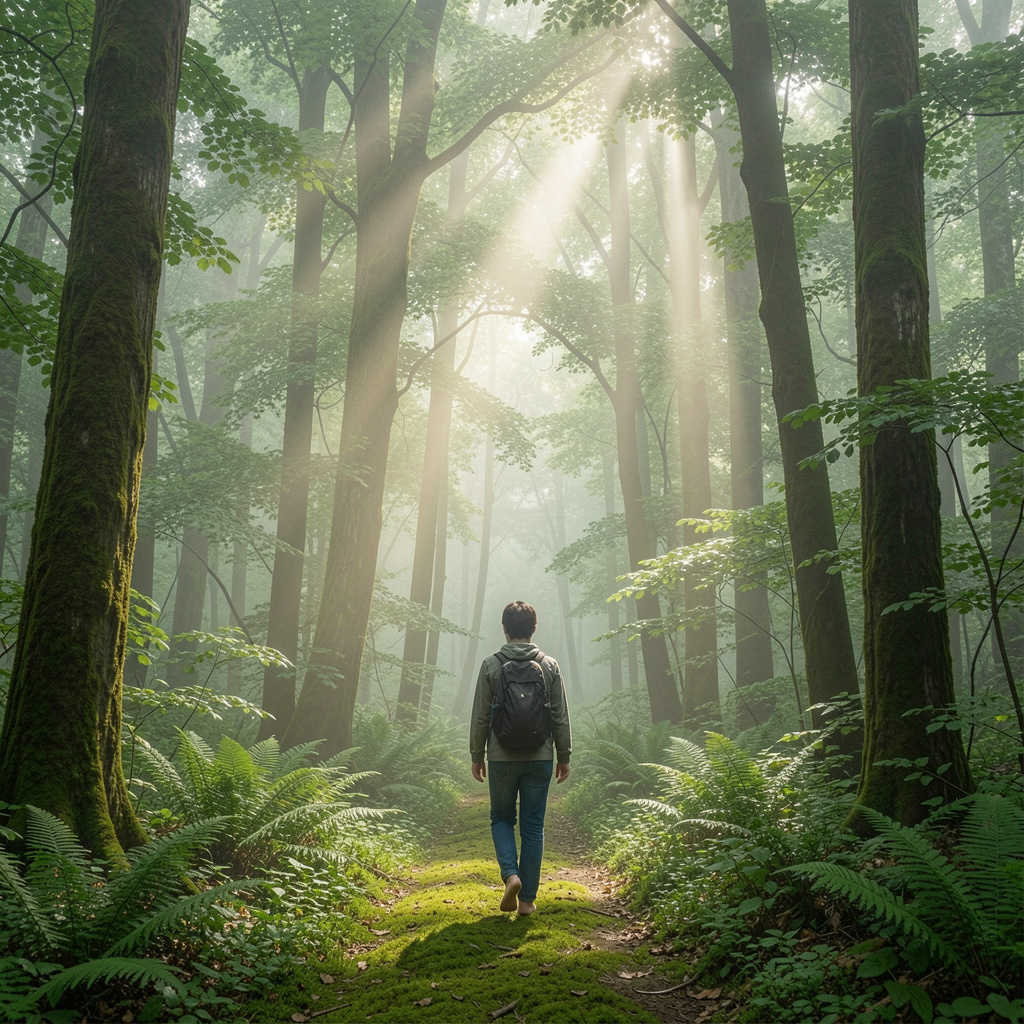
A 2010 study published in Environmental Health and Preventive Medicine measured what happens to the human immune system when people spend time in forests. The results were striking: Natural Killer cell activity increased significantly, anti-cancer proteins elevated, and stress hormones fell. The benefits lasted up to 30 days after a single three-day forest exposure. This is not wellness mythology. It is measured, peer-reviewed biology — and it has significant implications for how we think about preventive health.
This guide explains what forest bathing (Shinrin-yoku) is, what the science actually shows, how the biological mechanisms work, and how to integrate it into your life practically.
Table of Contents
- What Is Forest Bathing?
- What the 2010 Study Actually Found
- How Long the Immune Benefits Last
- How It Works: Phytoncides and Stress Biology
- Stress Reduction and the Immunity Connection
- Additional Physical and Mental Health Benefits
- Forest vs Urban Environments
- How to Practice Forest Bathing
- Forest Bathing as Preventive Medicine
- Study Limitations and Future Research
- Frequently Asked Questions
- Related Posts
What Is Forest Bathing?
Forest bathing — or Shinrin-yoku in Japanese — is the practice of spending time in a forest environment with deliberate sensory awareness. It is not hiking, exercise, or bird-watching. The emphasis is on slow, mindful presence: walking without a destination, breathing deeply, engaging all five senses with the natural environment, and allowing the nervous system to shift from sympathetic (activated) to parasympathetic (resting) dominance.
Japan introduced Shinrin-yoku as a formal public health programme in 1982 in response to rising rates of urban stress and lifestyle-related disease. The science behind it has grown substantially since then. Research from Japanese universities and hospitals has documented measurable physiological changes in immune function, cardiovascular health, cortisol levels, and cognitive performance that follow forest exposure — changes that don’t occur to the same degree in urban parks or indoor green spaces.
What the 2010 Study Actually Found
The landmark 2010 study in Environmental Health and Preventive Medicine recruited healthy adult participants for structured forest trips lasting three days and two nights. Participants walked approximately 2.5 kilometres per day in forest settings. Researchers measured Natural Killer (NK) cell activity, NK cell count, stress hormones (adrenaline and noradrenaline), and anti-cancer proteins including perforin, granzymes, and granulysin — before, during, and after forest exposure.
NK cells are a critical component of the innate immune system. They identify and destroy virus-infected cells and tumour cells without needing prior sensitisation — they are the immune system’s rapid response force. The study found NK cell activity increased significantly during and after forest exposure. NK cell counts in the bloodstream also rose. Anti-cancer protein levels elevated alongside NK activity, indicating that the cells became both more numerous and more functionally capable.
Stress hormones fell measurably. Adrenaline and noradrenaline levels dropped, indicating a genuine downregulation of the sympathetic nervous system response. Participants also reported significant improvements in mood, anxiety levels, and perceived fatigue. These weren’t marginal changes — they were statistically significant outcomes replicated across participants.
How Long the Immune Benefits Last
Perhaps the most clinically significant finding was the duration of the immune enhancement. NK cell activity remained elevated for more than seven days after participants returned to urban environments. In some participants, the effects were still measurable at 30 days post-exposure. A single three-day forest experience produced nearly a month of enhanced immune function.
Comparable studies have found that urban walks produce no comparable NK cell enhancement even when matched for physical activity, duration, and participant demographics. The forest environment — specifically the compounds released by trees — appears to be the active variable rather than exercise or relaxation alone.
How It Works: Phytoncides and Stress Biology
Phytoncides
Trees release natural volatile organic compounds called phytoncides as part of their chemical defence against insects, bacteria, and fungi. When humans breathe forest air, they inhale these compounds — primarily alpha-pinene, beta-pinene, and limonene. Research has shown that phytoncides directly activate NK cells, reduce the activity of stress hormones, and decrease inflammatory markers. Controlled laboratory studies where participants were exposed to phytoncide-infused air (without forest exposure) produced partial but measurable NK cell increases, confirming that these airborne compounds are a significant causal mechanism.
Autonomic Nervous System Regulation
Forest environments consistently produce a shift from sympathetic nervous system dominance (the fight-or-flight state activated by urban stress, noise, and digital stimulation) to parasympathetic dominance (the rest-and-digest state that supports immune function, digestion, and cellular repair). This shift is measurable through heart rate variability, cortisol reduction, and brain activity patterns. The sensory characteristics of forests — low-frequency natural sounds, soft light diffused by canopy, moderate humidity, and the absence of sharp urban stimuli — appear to facilitate this neurological shift in ways that urban green spaces only partially replicate.
Stress Reduction and the Immunity Connection
Chronic stress is one of the most well-documented suppressors of immune function. Elevated cortisol — the primary stress hormone — directly reduces NK cell activity, impairs T-cell function, and promotes inflammatory cytokine production that, over time, damages tissue and increases vulnerability to both infection and chronic disease. By reducing the hormonal markers of chronic stress, forest bathing addresses immune suppression at its most fundamental cause rather than treating symptoms downstream.
This connection explains why the immune benefits of forest bathing are more durable than those achieved through other relaxation interventions. If the mechanism is sustained stress reduction rather than temporary relaxation, the immune enhancement persists as long as the stress-reduction effect continues — which, in the 2010 study, extended weeks beyond the forest exposure itself.
Additional Physical and Mental Health Benefits
Beyond immune function, the research literature on forest bathing has documented reduced blood pressure and heart rate, improved cardiovascular variability, lower cortisol and inflammatory marker levels, reduced symptoms of anxiety and depression, improved attentional capacity and cognitive performance, and better sleep quality following regular forest exposure. Meta-analyses pooling multiple studies consistently find that the magnitude of these effects is larger in forest environments than in comparable urban park settings, even when controlling for physical activity levels.
Forest vs Urban Environments
One consistent finding across forest bathing research is that the effects are environment-specific. Urban walks in parks produce some stress reduction but do not replicate the NK cell enhancement or the depth of hormonal normalisation seen in forest studies. The reasons appear to be cumulative: forest air contains phytoncides and lower particulate pollution; forest soundscapes contain the low-frequency natural sounds (water, wind, birdsong) that research has linked to parasympathetic activation; forest light has specific spectral qualities different from urban lighting; and the visual complexity of a natural environment appears to engage attentional systems differently from built environments. Together these factors create a physiological response that urban green spaces only partially approximate.
How to Practice Forest Bathing
Forest bathing requires no equipment, training, or specific location beyond access to a forest or densely wooded area. The practice is intentionally unstructured. Walk slowly without a destination or a target distance. Leave your phone in your pocket or at home. Engage your senses actively: notice the quality of the light through the canopy, the texture of bark, the smell of the air, the sounds layered beneath and above each other. Breathe deeply and slowly. The goal is complete sensory presence in the environment, not exercise, photography, or any outcome other than being there.
Research suggests two to three hours per session for meaningful physiological benefit. Weekly shorter sessions provide maintenance effects; monthly longer immersions of two to three days produce the deep NK cell enhancement documented in the 2010 study. Even a single hour in a densely forested environment produces measurable cortisol reduction and mood improvement, making shorter regular practice valuable even when longer sessions are not possible.
Forest Bathing as Preventive Medicine
The medical community’s interest in forest bathing has grown as chronic stress-related conditions — cardiovascular disease, metabolic syndrome, immune dysfunction, depression — have become the dominant health challenges of urban populations globally. Forest bathing is drug-free, cost-free, free of side effects, scalable, and supported by a growing body of peer-reviewed research. It addresses the root cause of a significant proportion of modern illness — sustained sympathetic nervous system activation from urban stress — through a mechanism that is both ancient and biologically coherent.
Several Japanese hospitals now prescribe Shinrin-yoku as a complementary intervention for patients with high blood pressure, type 2 diabetes, and immune-related conditions. South Korean and Finnish public health programmes have integrated forest therapy into national wellness initiatives. As the evidence base grows, the case for formalising nature exposure as a preventive health recommendation strengthens.
Study Limitations and Future Research
The 2010 study’s limitations are worth noting honestly. Sample sizes were relatively small and drawn primarily from Japanese adult populations, limiting how confidently findings can be generalised to other demographics and health conditions. The study focused on short-term interventions, and long-term outcomes from sustained regular practice are less well-documented. Most research has been conducted in Japanese or East Asian forest environments, and whether effects are consistent across different forest types globally requires further investigation. Funding and replication across independent research teams is ongoing, and the mechanistic understanding of phytoncide effects in humans continues to be refined.
Frequently Asked Questions About Forest Bathing and Immunity
What is forest bathing and how does it work?
Forest bathing is the practice of slow, mindful immersion in a forest environment. It works primarily through two mechanisms: inhaling phytoncides — natural antimicrobial compounds released by trees — which directly activate Natural Killer immune cells, and triggering a shift from sympathetic to parasympathetic nervous system dominance that reduces stress hormones and supports immune function.
How long do the immune benefits of forest bathing last?
Research from the 2010 Environmental Health and Preventive Medicine study found that Natural Killer cell activity remained elevated for more than seven days, and in some participants up to 30 days, following a three-day forest immersion. A single weekend in a forest can produce nearly a month of enhanced immune activity.
Can I get similar benefits from an urban park?
Urban parks produce some stress reduction and mood improvement but do not replicate the NK cell enhancement documented in forest studies. The phytoncide concentration, air quality, natural soundscape, and sensory character of genuine forest environments appear to be necessary for the full immune response. Denser, older-growth urban parks come closer than manicured open-space parks but still don’t fully match forest conditions.
How often should you practice forest bathing?
Weekly two to three hour sessions maintain beneficial stress and immune effects. Monthly longer sessions of two to three days produce deeper NK cell enhancement. Even regular shorter exposures of 60 to 90 minutes produce meaningful cortisol reduction and mood benefits, making frequent shorter practice valuable alongside occasional longer immersions.
