Introduction
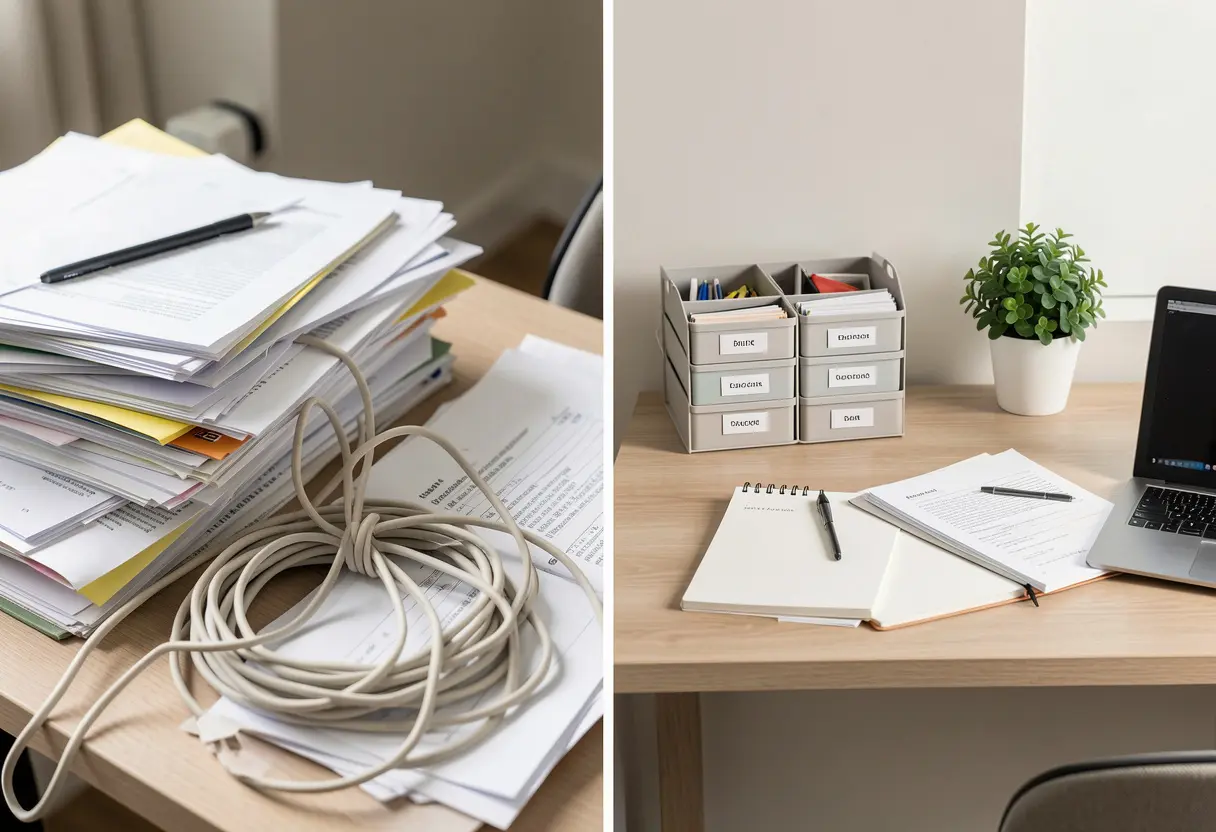
A cluttered environment often leads to a cluttered mind. Studies show that disorganized spaces can increase stress, reduce focus, and even affect productivity. The good news? Decluttering your home or workspace doesn’t have to be overwhelming. With a structured approach, you can transform your space—and your mental clarity—step by step.

Step 1: Start Small
Tackling an entire house at once can feel daunting. Start with one small area:
- A desk
- A kitchen counter
- A closet or drawer
Actionable Tip: Set a timer for 20–30 minutes and focus on that area. Even small wins give motivation.
Step 2: Sort Items Into Categories
Use the “Keep, Donate, Trash” method to decide what to do with each item.
- Keep: Essential or meaningful items.
- Donate: Items in good condition but no longer needed.
- Trash: Broken, expired, or unusable items.
Example: Your desk drawer might have:
- Keep: Pens, notebooks, chargers
- Donate: Old office supplies in excess
- Trash: Broken pens, dried markers
Step 3: Declutter by Zone
Divide your space into zones for easier organization.
- Work area: Desk, laptop, office supplies
- Living area: Coffee table, sofa, decor
- Storage: Closets, cabinets, shelves
Pro Tip: Complete one zone before moving to the next to prevent feeling overwhelmed.
Step 4: Organize the Keep Items Efficiently
Once you know what to keep, organize items so they are easily accessible.
- Use labeled bins or baskets
- Store frequently used items at eye level
- Stack vertically to save space
- Keep similar items together
Example: Office supplies: pens in one container, paper in another, chargers neatly coiled in a box.
Step 5: Implement Daily Decluttering Habits
Decluttering is not a one-time task—it’s an ongoing habit.
- Spend 5–10 minutes at the end of the day tidying up
- Put things back in their designated spots immediately after use
- Avoid bringing unnecessary items into already organized spaces
Tip: Combine this habit with a morning or evening routine (Blog 1) to make it automatic.
Step 6: Digital Declutter
Clutter isn’t just physical—digital spaces matter too.
- Clear your desktop and organize folders
- Unsubscribe from unwanted emails
- Delete unused apps and files
- Use productivity tools to keep digital tasks streamlined
Example: Treat your email inbox like a physical inbox: process, file, or delete every message.
Step 7: Personalize Your Space for Motivation
After decluttering, add elements that spark joy and focus.
- A small plant for greenery
- Inspirational quotes or art
- Comfortable lighting for your workspace
Pro Tip: Minimalism doesn’t mean boring—just intentional. Every item should have a purpose or bring happiness.
Step 8: Maintain the Momentum
Decluttering once is great, but maintaining the order is key.
- Schedule a monthly mini-declutter session
- Track progress in a journal or checklist
- Reward yourself after completing bigger decluttering projects
Sample Weekly Declutter Plan
| Day | Task |
|---|---|
| Monday | Declutter desk/workspace |
| Tuesday | Organize kitchen counters & pantry |
| Wednesday | Sort clothes closet |
| Thursday | Tidy living room & common areas |
| Friday | Digital declutter (emails, files, apps) |
| Saturday | Donate items sorted during the week |
| Sunday | Review & maintain order |
Conclusion
Decluttering is more than organizing—it’s a mental reset. By starting small, sorting items, organizing efficiently, and maintaining daily habits, you’ll experience less stress, better focus, and a more intentional life.
Internal Links for Further Reading:
- Maximize productivity with your space: Mastering Time Management
- Combine decluttering with healthy home habits: Healthy Home Habits That Transform Your Life