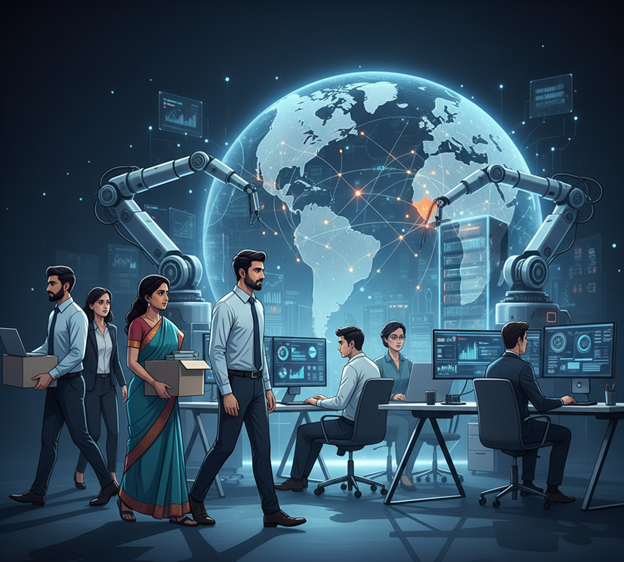
Artificial intelligence is no longer a futuristic concept. It is already changing the way people work, hire, communicate, and build businesses. From customer service chatbots to AI-powered content creation tools, automation is transforming industries faster than ever before.
Many people fear that AI will replace human jobs completely. Others believe it will create new career opportunities. The truth lies somewhere in between. AI is replacing repetitive tasks, but it is also creating demand for new skills, smarter workflows, and innovative job roles.
In 2026, businesses worldwide are investing heavily in AI technologies to improve productivity, reduce costs, and increase efficiency. This shift is affecting employees, freelancers, students, and business owners alike.
Featured Snippet Answer
Artificial intelligence is changing jobs by automating repetitive tasks, improving workplace productivity, and creating new career opportunities. While some traditional jobs are declining, AI is increasing demand for skills like data analysis, AI management, creativity, cybersecurity, and digital communication. Workers who adapt to AI tools and learn modern skills are more likely to succeed in the future job market.
Table of Contents
- What is AI in the Workplace?
- How AI is Changing Jobs
- Industries Most Affected by AI
- Jobs AI May Replace
- Jobs AI is Creating
- Skills Needed in the AI Era
- Best Ways to Prepare for AI Careers
- AI vs Human Workers
- Benefits of AI in the Workplace
- Challenges and Risks of AI
- Future of Work in 2030
- FAQs
What is AI in the Workplace?
Artificial intelligence in the workplace refers to machines and software performing tasks that normally require human intelligence. These tasks include:
- Writing content
- Answering customer queries
- Data analysis
- Image generation
- Decision-making
- Predicting trends
- Automating repetitive work
Companies now use AI tools to save time and improve efficiency. Popular platforms like OpenAI, Google, and Microsoft are leading this transformation with advanced AI systems used across industries.
How AI is Changing Jobs
AI is changing jobs in several important ways. Instead of replacing every worker, it is reshaping how work gets done.
1. Automation of Repetitive Tasks
Tasks that are repetitive and rule-based are increasingly automated.
Examples include:
- Data entry
- Invoice processing
- Email filtering
- Appointment scheduling
- Basic customer support
This allows employees to focus on more strategic and creative work.
2. Faster Decision-Making
AI systems can analyze massive amounts of data within seconds. Businesses use this information to:
- Predict customer behavior
- Improve marketing campaigns
- Reduce risks
- Optimize supply chains
As a result, companies can make smarter decisions faster than before.
3. Rise of Remote and Digital Jobs
AI-powered collaboration tools are helping companies manage remote teams efficiently. This has increased opportunities for:
- Freelancers
- Digital marketers
- Virtual assistants
- Remote developers
- Online educators
Remote work is expected to continue growing in 2026 and beyond.
4. Increased Productivity
Workers using AI tools can complete tasks much faster.
For example:TaskWithout AIWith AIContent Writing5 Hours1 HourData Analysis2 Days30 MinutesCustomer Support100 Queries/Day500 Queries/DayGraphic Design Drafts4 Hours20 Minutes
AI is becoming a workplace assistant rather than just a replacement technology.
Industries Most Affected by AI
Some industries are experiencing major AI-driven changes.
Healthcare
AI helps doctors analyze medical reports, predict diseases, and improve diagnosis accuracy.
Examples include:
- AI medical imaging
- Robot-assisted surgeries
- Virtual healthcare assistants
Finance
Banks use AI for:
- Fraud detection
- Credit scoring
- Investment predictions
- Automated trading
Education
AI-powered learning platforms personalize education based on student performance.
Teachers also use AI for:
- Automated grading
- Lesson planning
- Content creation
Manufacturing
Factories are using robots and AI systems to improve production speed and reduce human errors.
Marketing and Content Creation
AI tools now generate:
- Blog articles
- Social media captions
- Product descriptions
- Video scripts
- Images and designs
Digital marketing teams use AI for SEO analysis and audience targeting.
Jobs AI May Replace
AI is most likely to replace jobs that involve repetitive or predictable tasks.
Examples of Vulnerable Jobs
Data Entry Clerks
Manual data handling is being automated rapidly.
Basic Customer Support Agents
AI chatbots can answer common questions 24/7.
Telemarketers
Automated calling systems are reducing the need for large telemarketing teams.
Cashiers
Self-checkout systems and AI payment solutions are becoming more common.
Basic Bookkeeping Roles
Accounting software powered by AI can handle many routine financial tasks.
However, complete replacement is still unlikely in many industries because human oversight remains important.
Jobs AI is Creating
While AI removes some roles, it is also creating entirely new career paths.
Emerging AI Careers
AI Engineers
Professionals who build and train AI systems.
Prompt Engineers
Experts who create effective instructions for AI tools.
AI Ethics Specialists
People responsible for ensuring AI systems are fair and safe.
Data Scientists
Experts who analyze and interpret large datasets.
AI Content Strategists
Professionals who combine creativity with AI-powered tools.
Cybersecurity Experts
As AI grows, protecting systems and data becomes even more important.
Skills Needed in the AI Era
The future job market will reward people who combine technical and human skills.
Top Skills for Future Careers
1. AI Tool Usage
Learning platforms like ChatGPT and AI automation tools can improve productivity.
2. Critical Thinking
Humans still outperform AI in complex reasoning and judgment.
3. Creativity
Creative thinking remains difficult for AI to fully replicate.
4. Communication Skills
Strong communication is valuable in every industry.
5. Data Literacy
Understanding data and analytics is becoming essential.
6. Adaptability
Technology changes quickly. Continuous learning is critical.
Best Ways to Prepare for AI Careers
Learn AI Basics
You do not need to become a programmer immediately. Start with:
- AI fundamentals
- Prompt writing
- Automation tools
- Data analysis basics
Upskill Regularly
Online learning platforms provide affordable education in:
- Coding
- Digital marketing
- AI tools
- Design
- Analytics
Build a Personal Brand
Professionals who showcase expertise online attract more opportunities.
You can:
- Start a blog
- Create LinkedIn content
- Build a portfolio website
- Share projects online
Combine Human and AI Strengths
The most successful workers will use AI as a productivity partner rather than competing against it.
AI vs Human Workers
What AI Does Better
- Fast calculations
- Pattern recognition
- Repetitive tasks
- Data processing
- Automation
What Humans Do Better
- Emotional intelligence
- Leadership
- Creativity
- Ethics and judgment
- Relationship building
The future workplace will likely involve collaboration between humans and AI systems.
Benefits of AI in the Workplace
AI offers major advantages for businesses and employees.
Key Benefits
Increased Efficiency
Tasks are completed faster with fewer errors.
Better Customer Experience
AI chatbots provide instant support.
Lower Operational Costs
Automation reduces repetitive labor costs.
Smarter Insights
AI analyzes data for better business decisions.
More Innovation
Employees can focus on strategic and creative work.
Challenges and Risks of AI
Despite the benefits, AI also creates concerns.
Job Displacement
Workers in repetitive roles may face unemployment if they fail to adapt.
Privacy Concerns
AI systems collect large amounts of user data.
Bias in AI Systems
Poorly trained AI models can create unfair outcomes.
Dependence on Technology
Businesses relying heavily on AI may struggle during technical failures.
Future of Work in 2030
Experts predict that AI will continue transforming workplaces over the next decade.
Future trends may include:
- Hybrid human-AI teams
- AI-powered personal assistants
- Fully automated logistics systems
- Personalized learning and training
- More flexible remote work environments
The World Economic Forum has estimated that while millions of jobs may disappear, millions of new roles will also emerge due to AI and technology growth.
The key difference will be skills adaptation.
People who continuously learn and evolve will have stronger career opportunities in the AI-powered economy.
How to Stay Safe From AI Job Replacement
Here are practical strategies to remain competitive:
Focus on Human-Centered Skills
Develop strengths in:
- Leadership
- Communication
- Creativity
- Emotional intelligence
Learn Technology
Understanding AI tools makes workers more valuable.
Stay Updated
Technology evolves quickly. Follow industry trends regularly.
Become a Problem Solver
Businesses always need people who can solve real-world challenges.
Best Careers for the AI Future
CareerGrowth PotentialAI EngineerVery HighCybersecurity AnalystVery HighHealthcare SpecialistHighDigital Marketing ExpertHighData AnalystHighUX DesignerHighRobotics TechnicianGrowingContent StrategistGrowing
Comparison: Traditional Jobs vs AI-Augmented Jobs
Traditional WorkAI-Augmented WorkManual processesAutomated workflowsSlower productivityFaster task completionLimited analyticsReal-time insightsRepetitive tasksStrategic focusFixed job rolesFlexible hybrid roles
Real-World Examples of AI Changing Jobs
Customer Service
Many companies now use AI chatbots for first-level support while human agents handle complex issues.
Content Creation
Writers use AI tools for research, outlines, and editing while still adding human creativity and expertise.
Recruitment
HR teams use AI to screen resumes faster and identify qualified candidates.
E-commerce
Online stores use AI recommendation engines to personalize shopping experiences.
FAQs
What jobs are most at risk from AI?
Jobs involving repetitive and predictable tasks are most vulnerable. Examples include data entry, telemarketing, and basic administrative roles.
Will AI replace humans completely?
No. AI is designed to automate tasks, but human creativity, emotional intelligence, and decision-making remain essential.
Which careers are safe from AI?
Careers requiring empathy, creativity, leadership, and complex human interaction are generally safer from automation.
How can students prepare for AI careers?
Students should learn digital skills, AI tools, communication, problem-solving, and data literacy to remain competitive.
Is AI creating more jobs than it removes?
In many industries, AI is creating new job opportunities while changing existing roles rather than eliminating work completely.
What industries will grow because of AI?
Healthcare, cybersecurity, software development, digital marketing, robotics, and data analytics are expected to grow rapidly.
Artificial intelligence is changing jobs faster than most people expected. Some traditional roles are disappearing, while entirely new career opportunities are emerging. Businesses are using AI to improve productivity, reduce costs, and make smarter decisions.
However, the future does not belong to AI alone. It belongs to people who learn how to work alongside AI effectively.
Workers who adapt, upskill, and focus on human-centered strengths will remain valuable in the evolving job market. The key is not to fear AI but to understand it and use it wisely.
The future of work is not human versus AI. It is human plus AI.
Want to stay ahead in the AI-driven future? Start learning AI tools, digital skills, and automation strategies today. The earlier you adapt, the stronger your career opportunities will be in 2026 and beyond.
If you found this article helpful, share it with friends, students, and professionals preparing for the future of work.