
Table of Contents
- How Wind Turbines Generate Power
- Land Use and Habitat Disruption
- Materials and Manufacturing Footprint
- The Blade Waste Problem
- Intermittency and Grid Stability
- Wildlife and Biodiversity Impacts
- Lifecycle Carbon Assessment
- How Wind Energy Is Improving
- Frequently Asked Questions
- Related Posts
How Wind Turbines Generate Power
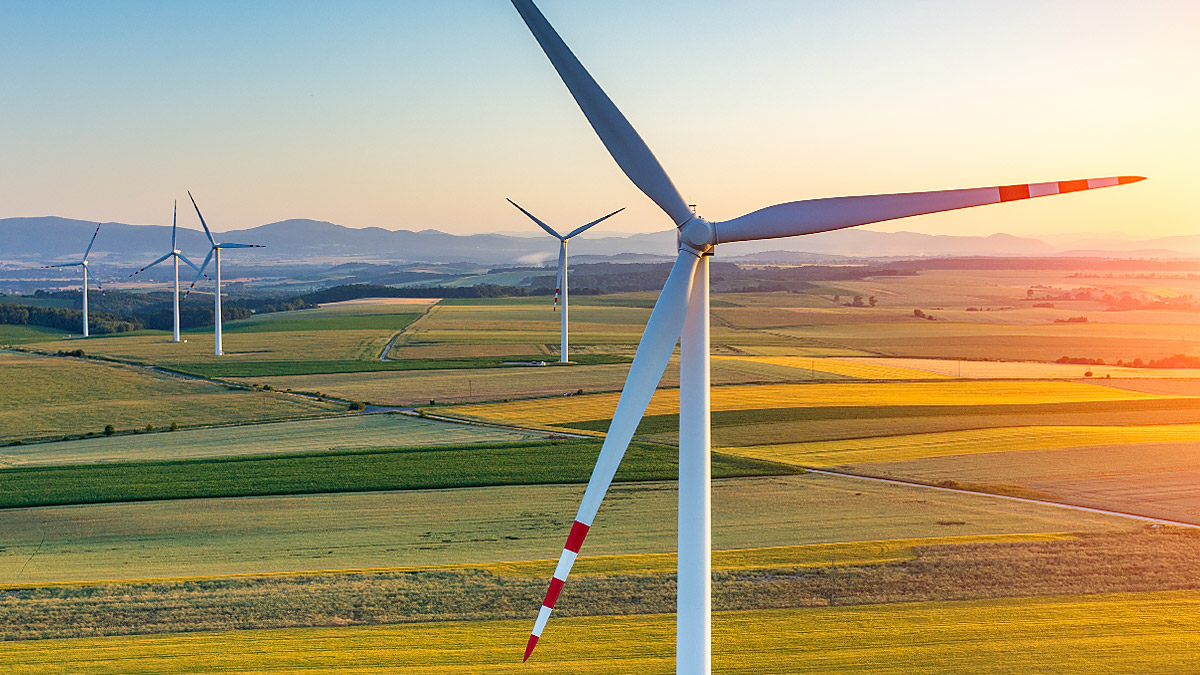
Wind turbines convert kinetic energy in moving air into electrical energy. Wind turns turbine blades, which spin a rotor connected to a generator. The electricity generated depends on wind speed (output scales with the cube of wind speed, so doubling wind speed produces eight times the power) and turbine size. Modern utility-scale onshore turbines are 2 to 5 MW capacity; offshore turbines reach 12 to 15 MW. Wind energy is genuinely renewable — it produces no greenhouse gas emissions during operation and has lower lifecycle carbon than coal, oil, or natural gas. But describing it as completely sustainable requires examining the full picture.
Land Use and Habitat Disruption
A utility-scale wind farm requires approximately 0.1 to 0.3 square kilometres of direct land use per turbine, but the total spacing between turbines (required to prevent wake interference between turbines) means each turbine’s effective land footprint is much larger — typically 0.5 to 1.5 km² per turbine depending on configuration. A 500 MW wind farm might occupy 500 to 1,000 km² of land, though most of that land between turbines can continue to be used for agriculture, grazing, or conservation. Road construction for maintenance access and power line infrastructure add additional land disruption. Wind farms sited on ecologically sensitive land, migration corridors, or important biodiversity areas can cause disproportionate habitat fragmentation.
Materials and Manufacturing Footprint
Manufacturing a modern wind turbine requires significant quantities of steel (for the tower), concrete (for the foundation), fibreglass and carbon fibre (for the blades), copper (for electrical systems), and rare earth elements including neodymium for the permanent magnets in direct-drive generators. Rare earth element mining is concentrated in China, involves significant environmental disruption including radioactive waste, and the supply chain has meaningful human rights concerns. The manufacturing energy and emissions for a turbine are substantial — though they are recovered within 6 to 12 months of operation against the 20 to 25 year turbine lifespan.
The Blade Waste Problem
Wind turbine blades are typically 50 to 100 metres long and made from fibreglass composites that are currently very difficult and expensive to recycle. The thermoset resins used in conventional blade manufacturing don’t lend themselves to standard recycling processes. As the first generation of large-scale wind turbines reaches end of life (turbine blades last 20 to 25 years), an estimated 43 million tonnes of blade waste will need to be managed globally by 2050. Currently, most end-of-life blades in countries without strict disposal regulations end up in landfill — a significant and unsolved sustainability problem.
Intermittency and Grid Stability
Wind turbines generate electricity only when the wind is blowing at sufficient speed — typically between 3 and 25 metres per second. At most locations, capacity factors (actual output as a percentage of theoretical maximum output) range from 25 to 45% for onshore wind and 35 to 55% for offshore wind. This intermittency means wind cannot provide reliable baseload power without backup generation (typically gas peaking plants) or storage (batteries, pumped hydro, hydrogen). The system cost of intermittency — the investment required in backup generation, grid management, and storage to maintain supply reliability when wind output is low — is a real cost not always attributed to wind energy in headline cost comparisons.
Wildlife and Biodiversity Impacts
Wind turbines kill birds and bats through direct collision and through barotrauma (pressure changes from blade tips). Estimates for bird mortality range widely from 140,000 to 500,000 birds annually in the US alone. This is fewer than buildings (600 million estimated annually) or cats (1.3 to 4 billion), but includes a disproportionate number of raptors and protected species because large turbines are often sited in high-wind areas that are also raptor hunting grounds and migration corridors. Bat mortality is particularly concerning — bats are essential for insect population control and face multiple other threats. Modern siting protocols, radar-activated curtailment (shutting down turbines during high-migration periods), and acoustic deterrents are reducing but not eliminating wildlife impacts.
Lifecycle Carbon Assessment
A lifecycle assessment (LCA) of wind energy — accounting for manufacturing, transport, installation, operation, maintenance, and decommissioning — produces lifecycle emissions of 7 to 15 grams of CO2 equivalent per kilowatt-hour. For comparison: coal is 820 gCO2eq/kWh, natural gas 490 gCO2eq/kWh, nuclear 12 gCO2eq/kWh, and solar PV 20 to 50 gCO2eq/kWh. Wind energy’s lifecycle carbon is among the lowest of any energy source. The sustainability challenge is not primarily the carbon footprint but the land use, material supply chains, blade waste, intermittency management, and wildlife impacts outlined above.
How Wind Energy Is Improving
Several innovations are addressing wind energy’s sustainability limitations. Thermoplastic blade materials (like those developed by Vestas and Siemens Gamesa) enable recycling of blade composites at end of life. Gearless direct-drive turbines reduce rare earth element requirements. Offshore floating wind platforms access stronger and more consistent ocean winds with less sensitive ecosystem disruption than onshore development. AI-driven predictive maintenance extends turbine lifespans. Smart curtailment technology detects birds and bats and temporarily shuts down individual turbines during migration events. These improvements are narrowing the gap between wind’s current limitations and genuine sustainability.
Frequently Asked Questions
Why aren’t windmills 100% sustainable?
Wind turbines have real sustainability challenges: non-recyclable blade waste accumulating at scale, rare earth element supply chains with environmental and ethical issues, intermittency requiring backup generation, land use impacts, and wildlife mortality. These don’t negate wind energy’s role in decarbonisation but show that no current energy technology is perfectly sustainable.
What is the lifecycle carbon footprint of a wind turbine?
7 to 15 grams of CO2 equivalent per kilowatt-hour across the full lifecycle (manufacturing, installation, operation, decommissioning). This is among the lowest of any energy source and compares to 820 gCO2eq/kWh for coal and 490 gCO2eq/kWh for natural gas.
Can wind turbine blades be recycled?
Currently, most conventional fibreglass composite blades cannot be economically recycled and end up in landfill. New thermoplastic blade designs from Vestas, Siemens Gamesa, and others enable recycling, but these represent a small fraction of installed capacity. Blade recyclability is one of wind energy’s most significant active sustainability challenges.
