
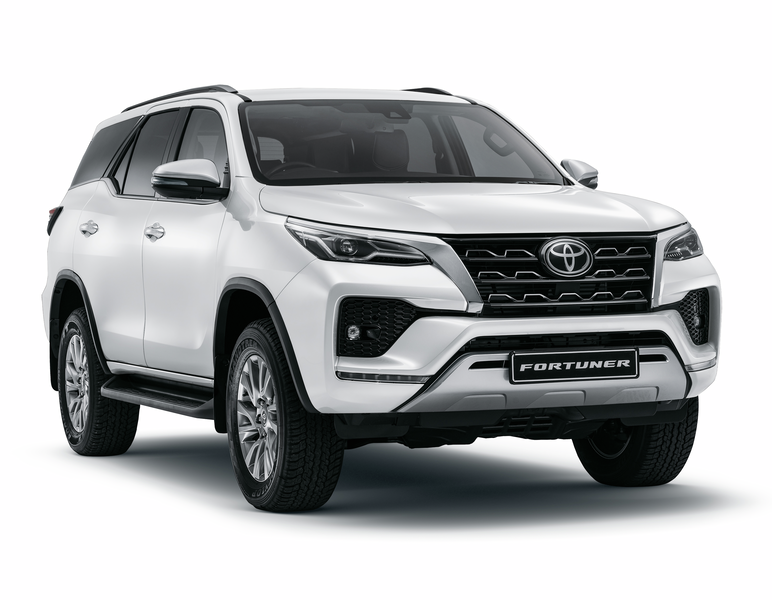
Some vehicles earn their place in a market through clever marketing. Others earn it by doing the job so consistently and so well that their reputation simply becomes impossible to argue with. The Toyota Fortuner is firmly in the second category. Since arriving in India in 2009, it has remained the country’s best-selling full-size SUV through every market shift, every new rival, and every wave of technological change — not by being the most feature-laden, but by being the most dependable.
In 2026, the Fortuner continues that tradition while adding modern features, mild-hybrid efficiency, and premium variants that address the one criticism buyers have long raised: that the interior doesn’t match the exterior’s commanding presence. This guide covers everything — design, powertrains, interior, safety, pricing, ownership economics, and an honest verdict on who should buy it.
Table of Contents
- The Fortuner’s Legacy: Why It Dominates
- Design and Road Presence
- Powertrain Options: Petrol and Diesel
- Performance and Off-Road Capability
- Interior, Comfort, and Features
- Safety Ratings and Technology
- Pricing and Variants in 2026
- Ownership Economics and Resale Value
- Honest Pros and Cons
- How It Compares to Rivals
- Who Should Buy the Toyota Fortuner
- Frequently Asked Questions
- Related Posts
The Fortuner’s Legacy: Why It Has Dominated for 15+ Years
The Toyota Fortuner arrived in India in 2009 at a time when the full-size SUV segment was genuinely underserved. Buyers who needed serious capability, serious space, and serious durability had limited options. The Fortuner filled that gap decisively, offering a ladder-frame body-on-frame construction — the same platform architecture used in the Hilux pickup and Land Cruiser Prado — at a price that made it accessible to a much broader audience than those legendary nameplates.
What happened next was a sustained market dominance that competitors have been unable to disrupt despite repeated attempts. The MG Gloster came with more features. The Jeep Meridian brought European design DNA. The Skoda Kodiaq offered monocoque refinement. None of them dented the Fortuner’s sales consistently, because none of them could match the combination of Toyota reliability, widespread service access, and the resale value that makes the Fortuner the only SUV in its class that buyers confidently expect to sell for close to what they paid.
The cultural dimension matters too. In Tier 2 and Tier 3 cities across India, the Fortuner carries a social weight that no brochure can manufacture. It signals a particular kind of achievement — earned, practical, and built to last. That perception, reinforced over 15 years of ownership stories, is as much a part of what buyers are purchasing as the vehicle itself.
Design and Road Presence: The View From Behind
The 2026 Fortuner measures 4,795 mm in length, 1,855 mm wide, and rides on a 2,745 mm wheelbase. These are substantial dimensions that translate into an equally substantial road presence. The muscular front end features a large chrome-accented grille, sharp LED headlights with daytime running lamps, and flared wheel arches that sit wide and planted at all four corners.
Ground clearance of 220 to 225 mm is among the highest in the full-size SUV class — a number that translates into genuine confidence on flooded streets, rural diversions, rocky trails, and the unmarked speed breakers that define Indian driving. 17 or 18 inch alloy wheels complete a silhouette that reads as capable and purposeful rather than merely large.
Premium variants elevate the visual appeal significantly. The Legender adds dual-tone paint, a distinctive triple LED headlight signature, and a more aggressive front bumper. The GR-S takes a sportier direction with blacked-out elements, unique alloy wheel designs, and GR badging that references Toyota’s Gazoo Racing motorsport pedigree. Both variants achieve what the standard Fortuner can sometimes feel it lacks — a sense of occasion that matches the price tag.
Powertrain Options: Petrol and Diesel
2.7-Litre Naturally Aspirated Petrol
The petrol produces around 164 bhp and 245 Nm of torque, available with a 6-speed manual or automatic transmission in 4×2 configuration. It’s smooth and well-suited to urban commuting and moderate highway use. ARAI fuel efficiency sits around 10.3 to 11 kmpl, with real-world mixed returns typically landing at 8 to 10 kmpl. The petrol is a good choice for buyers in cities where CNG infrastructure is limited and whose driving is primarily urban with occasional highway runs.
2.8-Litre Turbodiesel with Mild Hybrid
The diesel is where the Fortuner truly distinguishes itself. Producing up to 201 to 204 bhp and between 420 and 500 Nm of torque depending on transmission and drivetrain variant, it delivers the kind of effortless, low-rev pulling power that makes loaded highway runs, towing, and mountain driving feel entirely manageable. The automatic 4×4 variant produces the full 500 Nm figure, which is more torque than most full-size SUVs at any price point.
The mild-hybrid (Neo Drive 48V) system available on select variants adds a light electric assist that smooths out gear changes, reduces engine strain at low speeds, and contributes modest efficiency gains. Real-world fuel efficiency on mixed driving typically lands between 11 and 14 kmpl, with pure highway runs touching 14 to 16 kmpl in the manual variant. For families covering 1,500 km or more monthly, the diesel’s running cost advantage over the petrol is substantial.
Performance and Off-Road Capability
The Fortuner’s body-on-frame construction is the engineering choice that defines its character. While monocoque unibody SUVs offer better on-road refinement and ride quality on smooth surfaces, the ladder-frame setup absorbs chassis twist on uneven terrain, withstands the accumulated stress of rough road driving better over a vehicle’s lifespan, and provides the structural foundation for serious off-road work.
The 4×4 variants add a low-range transfer case, Active Traction Control, hill-start and hill-descent control, and a rear differential lock on select models. Combined with the ground clearance of 220+ mm and a wading depth that exceeds most urban flooding scenarios, the Fortuner is genuinely capable of terrain that defeats most premium SUVs sold at significantly higher prices.
On highway use, the diesel automatic delivers confident high-speed cruising with strong mid-range pull for overtaking. The ride is firm by modern SUV standards — a direct consequence of the body-on-frame setup — and sharp-edged urban potholes transmit more impact than in monocoque rivals. This is a known and accepted trade-off for Fortuner buyers, who generally prioritise durability and capability over urban ride plushness.
Interior, Comfort, and Features
The 2026 Fortuner’s interior has been the area of most consistent improvement over recent updates. Higher trims now feature leather upholstery, ventilated and powered front seats, a large touchscreen infotainment system with wireless Android Auto and Apple CarPlay, Toyota’s connected car technology platform, a premium JBL audio system, dual-zone automatic climate control, rear AC vents, wireless charging, ambient lighting, and a fully digital instrument cluster.
The seven-seat layout offers genuine first and second-row comfort for adults on long journeys. The second row features generous legroom and good headroom — the high roofline pays dividends here. The third row is honestly best suited to children or shorter adults for journeys under two hours, though it’s more usable than the equivalent space in most compact and mid-size SUVs. Boot space of approximately 296 litres with all seats up expands significantly when the third row is folded flat.
Where the Interior Still Has Room to Grow
Honest assessment: the Fortuner’s interior, while much improved, still feels less visually exciting than some rivals at similar or lower price points. The Mahindra XUV700 offers a more dramatic cabin experience. The Tata Harrier EV’s interior feels more premium on certain materials. No panoramic sunroof is available on standard Fortuner variants, which is an increasingly common expectation at this price. These are legitimate observations rather than dealbreakers for the Fortuner’s target buyer, who typically values durability and function over interior theatre — but worth knowing before you compare spec sheets.
Safety Ratings and Technology
The Fortuner is equipped with seven airbags including a knee airbag for the driver, ABS with EBD, Vehicle Stability Control, Traction Control, hill-start assist, and a 360-degree camera in top variants. It has earned strong ratings in ASEAN NCAP testing, which reflects the structural strength that body-on-frame construction typically delivers in crash scenarios.
Higher variants add Toyota Safety Sense technology including pre-collision warning, adaptive cruise control, lane departure alert, and automatic high beam. The rear cross-traffic alert and blind spot monitoring on upper trims address the visibility limitations that come with a tall, wide vehicle in urban environments. The comprehensive airbag count is particularly welcome given the Fortuner’s popularity for long highway journeys where serious accident risks are higher.
According to the Global New Car Assessment Programme (Global NCAP), body-on-frame SUVs with high ground clearance and multiple airbags consistently perform well in offset frontal and side-impact tests when properly engineered — a category in which Toyota’s safety investment has been consistently strong across its global lineup.
Pricing and Variants in 2026
The Toyota Fortuner range starts at approximately ₹34.16 lakh (ex-showroom) for the base petrol variant and extends to around ₹50.46 lakh for the top-spec diesel GR-S 4×4 automatic. On-road pricing in major cities adds ₹4 to ₹7 lakh depending on state registration charges, insurance, and accessories — meaning top variants comfortably exceed ₹55 to ₹60 lakh on-road in metros.
The variant lineup spans base Fortuner petrol and diesel through to Legender and GR-S, with 4×2 and 4×4 drivetrain choices and manual and automatic transmission options across the diesel range. The diesel automatic 4×4 is the most popular configuration, particularly for buyers who intend to use the vehicle’s full capability on challenging terrain and long highway runs.
Ownership Economics and Resale Value
This is where the Fortuner’s argument becomes truly compelling. Resale value for well-maintained Fortuner examples consistently lands at 65 to 75% of purchase price after three to five years — a retention rate that exceeds virtually every competitor in the full-size SUV segment and many vehicles at higher price points. The practical consequence: a buyer who pays ₹48 lakh for a top-spec diesel automatic and sells it after four years will typically recover ₸31 to ₹36 lakh, making the effective ownership cost over that period significantly lower than the purchase price gap might suggest.
Toyota’s service network spans over 1,000 authorised outlets across India, with trained technicians and genuine parts availability even in Tier 3 cities and smaller towns. Scheduled maintenance costs are predictable and competitive. The simplicity of the diesel engine’s mechanical architecture — proven over many years of production — means unexpected reliability issues are uncommon and expensive surprises rare. For buyers who calculate total cost of ownership rather than just purchase price, the Fortuner’s arithmetic is consistently favourable.
Honest Pros and Cons
What the Fortuner Does Best
- Class-leading resale value — 65 to 75% retention after three to five years
- Proven body-on-frame durability that handles India’s worst roads over a decade+
- Massive diesel torque — up to 500 Nm for effortless loaded highway and off-road use
- Genuine 4×4 off-road capability with low-range transfer case and rear diff lock
- 220+ mm ground clearance for confident navigation on flooded roads and rough terrain
- Toyota’s 1,000+ outlet service network with trained technicians across India
- Seven airbags standard and ASEAN NCAP-tested structural safety
Where It Has Room to Improve
- Firm ride quality on broken urban roads — a body-on-frame characteristic
- Interior visual drama trails rivals like the XUV700 at lower price points
- No panoramic sunroof on standard variants
- Petrol variant’s fuel efficiency trails modern turbopetrol competitors
- Large dimensions require adjustment in tight urban parking environments
- Third row is honestly best for children and shorter adults only
How the Fortuner Compares to Rivals
Against the MG Gloster, the Fortuner wins on reliability, resale, and service network; the Gloster counters with more features and a more dramatic interior at a similar price. The Jeep Meridian offers a more sophisticated on-road experience and European design character but trails on service network depth and resale certainty. The Skoda Kodiaq provides superior monocoque ride quality and European premium feel but lacks the Fortuner’s off-road credentials and proven Indian road durability.
The Mahindra XUV700 at a lower price point offers a dramatically more feature-rich cabin and strong safety credentials but sacrifices the body-on-frame durability and resale value that many Fortuner buyers consider non-negotiable. The Tata Harrier EV offers a compelling electric alternative at a comparable price but is a fundamentally different ownership proposition for a different use case.
Who Should Buy the Toyota Fortuner in 2026
The Fortuner is the right choice for buyers who prioritise long-term reliability and resale value over cutting-edge technology, who regularly drive on challenging terrain or frequently cover 400+ km highway runs, and who value the peace of mind of Toyota’s service network in cities and towns across India. It suits large families, professionals and business owners in Tier 2 and Tier 3 cities, and adventure enthusiasts who want genuine capability without the running costs of a Land Cruiser.
Choose the diesel automatic 4×4 if capability and performance across all conditions is the priority. Choose the diesel automatic 4×2 if your driving is primarily urban and highway with only occasional rough terrain. Choose the petrol if you’re in a city with high diesel taxes and predominantly urban driving habits.
The Fortuner is not the right choice for buyers who want a plush, cushioned ride quality, those who prioritise interior technology and visual drama over durability, or anyone whose primary use is urban commuting without a genuine need for the capability and space the Fortuner provides at its price. For everyone else — and there are a great many of them — the Fortuner’s combination of durability, capability, brand trust, and resale value remains genuinely difficult to match.
Frequently Asked Questions About the Toyota Fortuner
What is the starting price of the Toyota Fortuner in 2026?
The Toyota Fortuner starts at approximately ₹34.16 lakh (ex-showroom) for the base petrol variant. The top-spec GR-S diesel 4×4 automatic is priced at around ₹50.46 lakh ex-showroom. On-road prices in major cities vary by state and typically add ₹4 to ₹7 lakh.
Which is better — Toyota Fortuner petrol or diesel?
The diesel is the stronger choice for most buyers — particularly the 2.8-litre automatic with up to 500 Nm of torque. It offers better fuel efficiency on highway runs, more confident loaded performance, and superior long-distance capability. The petrol suits urban-heavy usage patterns where diesel taxes are high and highway distances are moderate.
What is the resale value of the Toyota Fortuner?
The Toyota Fortuner consistently retains 65 to 75% of its purchase value after three to five years — among the best resale retention rates of any SUV in India at any price point. Diesel automatic variants hold value particularly well due to high demand in the used market.
Is the Toyota Fortuner good for off-road driving?
Yes. The 4×4 variants with low-range transfer case, rear differential lock, Active Traction Control, hill-descent control, and 220+ mm ground clearance make the Fortuner genuinely capable on rocky trails, sand, mud, and deep water crossings. It significantly outperforms monocoque unibody rivals on challenging terrain.
How many seats does the Toyota Fortuner have?
The Toyota Fortuner seats seven passengers across three rows. The first two rows are comfortable for adults on long journeys. The third row is best suited to children or shorter adults on trips under two hours.
What is the ground clearance of the Toyota Fortuner?
The Toyota Fortuner has a ground clearance of approximately 220 to 225 mm, which is among the highest in the full-size SUV class and well-suited to India’s diverse road conditions including flooded streets, rough rural tracks, and unmarked speed breakers.
Related Posts
- Mahindra XUV700 2026: The Feature-Packed Full-Size SUV Reviewed
- Tata Harrier EV 2026: India’s Most Powerful Electric SUV Reviewed
- Tata Nexon EV 2026: India’s Most Trusted Electric SUV Reviewed
- Kia Seltos 2026: The Compact SUV That Refuses to Compromise
- Tata Curvv 2026: The SUV-Coupe That’s Rewriting India’s Car Market
