
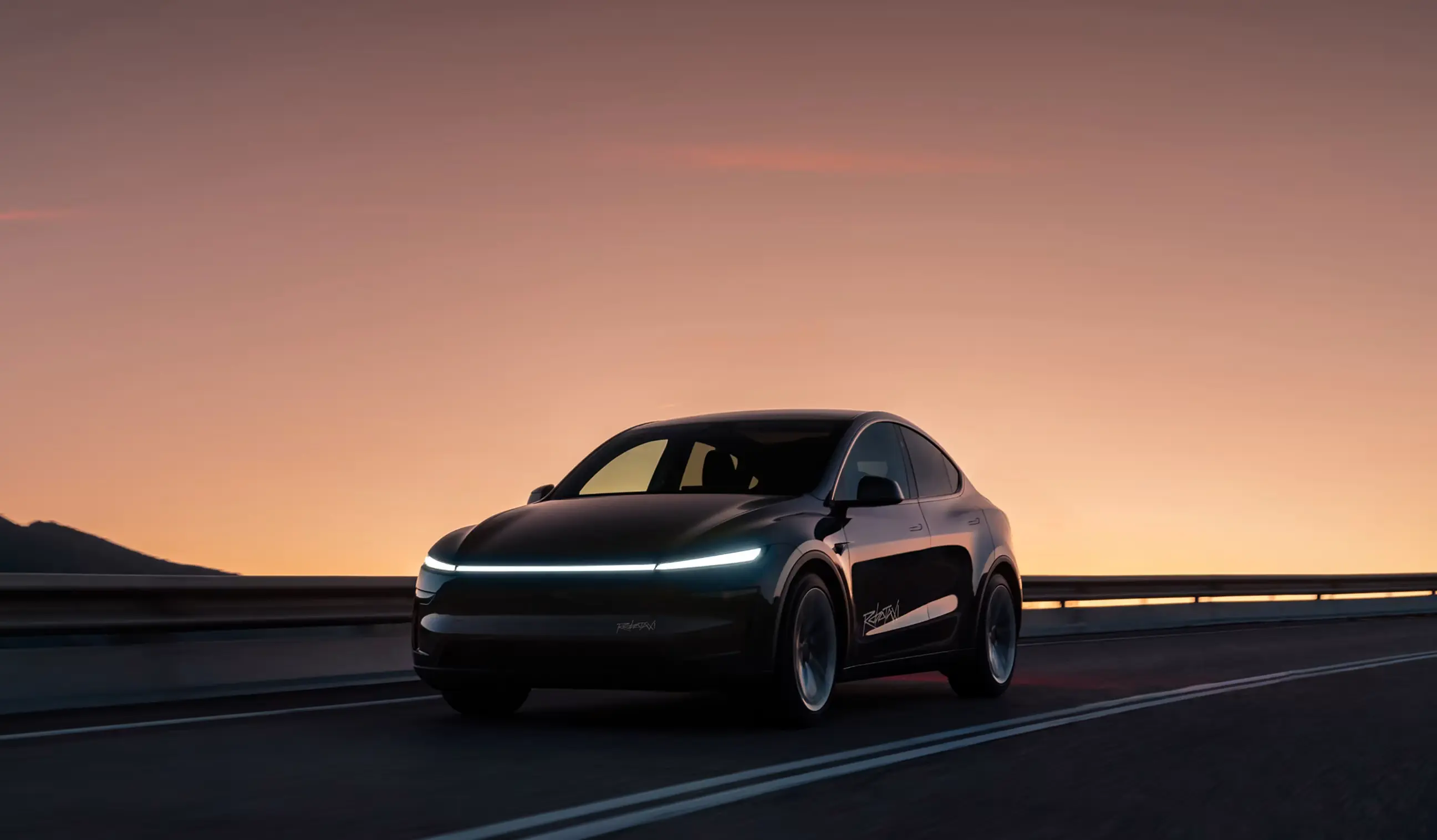
For most of automotive history, the idea of a car without a driver was firmly in the realm of science fiction. Then Tesla started putting cameras on its vehicles and training neural networks on billions of miles of real-world driving data. The conversation shifted. Suddenly, the question wasn’t whether autonomous vehicles would arrive — it was when, and what the world would look like when they did.
In 2026, Tesla’s Robotaxi has moved from concept to operational reality in select cities, with Waymo, Baidu Apollo, and others running competing services in parallel. This guide covers what a Robotaxi actually is, how Tesla’s approach works, what it means for transportation, cities, and employment — and what the honest challenges still look like from here.
Table of Contents
- What Is the Tesla Robotaxi?
- The Road to Autonomous Transportation
- How Tesla’s Self-Driving Technology Works
- The Cybercab: Tesla’s Purpose-Built Robotaxi
- Real-World Performance and Launch Status
- How Robotaxis Could Reshape Cities and Daily Life
- The Honest Challenges: Safety, Regulation, and Jobs
- Global Autonomous Vehicle Race
- Economics of Robotaxi Ownership and Ridership
- Tesla vs Waymo vs Baidu: How They Compare
- What Comes Next for Autonomous Transportation
- Frequently Asked Questions
- Related Posts
What Is the Tesla Robotaxi?
A Robotaxi is a fully autonomous vehicle that operates as a driverless taxi service — no human behind the wheel, no safety driver in the passenger seat. The passenger summons the vehicle through an app, the car navigates to the pickup location, completes the journey using AI and onboard sensors, and processes payment automatically. The entire interaction happens without a human driver at any point.
Tesla’s version of this concept is ambitious in its scope. Rather than relying on expensive LiDAR hardware as most competitors do, Tesla built its autonomous driving system around cameras and neural networks — what the company calls a vision-based AI approach. The argument is that humans navigate the world using eyes, and a sufficiently advanced AI trained on enough visual data can do the same. Whether that argument is correct at scale is the central debate in autonomous vehicle development today.
Tesla’s longer-term Robotaxi vision extends beyond a fleet of company-owned vehicles. The plan envisions Tesla owners being able to add their personal vehicles to a shared autonomous network when not using them — essentially turning a privately owned car into a revenue-generating asset. It’s a model that, if it works, fundamentally changes the economics of car ownership.
The Road to Autonomous Transportation
The concept of self-driving vehicles is older than most people realise. Engineers were experimenting with automated driving systems as far back as the 1950s, with early concepts involving magnetised road strips that guided vehicles along predetermined paths. These were more infrastructure projects than AI, but they established the aspiration.
The modern era of autonomous vehicles began in earnest with DARPA’s Grand Challenge competitions in the 2000s, which pushed university and private teams to develop vehicles capable of navigating unmapped desert terrain without human input. Those competitions produced the engineers who went on to build Google’s self-driving programme, which eventually became Waymo. The DNA of today’s autonomous vehicle industry traces directly back to those desert racing events.
Tesla entered the conversation differently. Rather than building an autonomous vehicle from scratch, the company deployed driver assistance features — Autopilot, then Full Self-Driving (FSD) — across its existing consumer vehicle fleet, collecting billions of miles of real-world driving data from customers who used those features daily. By 2026, that data advantage has compounded into a neural network trained on more driving scenarios than any competitor has been able to replicate in controlled testing environments.
How Tesla’s Self-Driving Technology Works
Tesla’s autonomous driving system processes input from eight cameras mounted around the vehicle, providing 360-degree visual coverage with overlapping fields of view. This camera data feeds into a custom-designed AI chip — the Tesla FSD computer — which runs neural networks trained to identify and respond to every object, marking, signal, and scenario a driver might encounter.
The neural network approach means the system learns from experience rather than following pre-programmed rules. When the AI encounters a scenario it hasn’t seen before, it responds based on learned patterns from millions of similar situations in its training data. Over time, as more miles are driven and more edge cases are encountered, the system becomes more capable — improving continuously through over-the-air software updates to every Tesla on the road.
Vision-Only vs LiDAR: The Core Technical Debate
Tesla’s decision to use cameras only — without LiDAR (Light Detection and Ranging) sensors that bounce laser pulses off objects to build precise 3D maps — is both its most distinctive technical choice and its most debated one. Waymo and most other autonomous vehicle developers use LiDAR extensively, arguing that its precise depth perception is essential for safe operation in complex environments.
Tesla’s counter-argument is that LiDAR is expensive, adds hardware complexity, and is ultimately unnecessary if the vision system is sufficiently capable. Elon Musk has called LiDAR a crutch. Critics argue that camera-only systems struggle in conditions where human vision would also struggle — heavy rain, bright sun, obscured lane markings — and that LiDAR provides a critical backup layer. The debate has not been definitively settled, and both approaches are being tested at scale simultaneously.
The Cybercab: Tesla’s Purpose-Built Robotaxi
In October 2024, Tesla unveiled the Cybercab — a purpose-designed two-passenger autonomous vehicle with no steering wheel, no accelerator pedal, and no provision for a human driver. The Cybercab was engineered from the ground up as a Robotaxi rather than a converted consumer vehicle, which allows optimisations in cost, packaging, and durability that aren’t possible when retrofitting an existing model.
The design is distinctive — butterfly doors, a low-slung body, and an interior focused entirely on passenger comfort rather than driver ergonomics. Charging is handled wirelessly, eliminating the need for a plug connection between rides. The projected cost per mile for passengers is significantly below current ride-hailing rates, though real-world pricing in commercial operation will depend on utilisation rates, maintenance costs, and regulatory fees.
Production and commercial deployment timelines have shifted several times since the original announcement. In 2026, limited Cybercab operation has launched in Austin, Texas, with expansion to other US cities ongoing. Full-scale production and broader deployment remain dependent on regulatory approval in each market.
Real-World Performance and Launch Status
Tesla launched unsupervised FSD operation in Austin in June 2025 as part of a limited employee and invited user programme. Early reports from participants described the system as competent in most urban driving scenarios — handling traffic lights, lane changes, merging, and navigation without intervention in the majority of trips. Edge cases involving unusual situations, construction zones, and unpredictable pedestrian behaviour continued to require attention.
By 2026, the operational geography has expanded, and the disengagement rate — the frequency with which the system requires human intervention — has continued to decline with software updates. Independent safety researchers have noted improvement but continue to argue that the data transparency needed to make definitive safety comparisons with human drivers is not yet publicly available.
Waymo, operating a competing Robotaxi service in San Francisco, Phoenix, and Los Angeles using LiDAR-equipped vehicles, has published more detailed safety data. A study published in the journal Nature found that Waymo’s autonomous vehicles were involved in significantly fewer injury-causing crashes per mile driven than the national average for human-driven vehicles — providing the strongest published evidence to date that autonomous systems can match or exceed human safety performance in controlled operational environments.
How Robotaxis Could Reshape Cities and Daily Life
The implications of widespread autonomous transportation extend far beyond cheaper taxi rides. Urban planning researchers have been modelling the second and third-order effects for years, and the potential changes are significant.
Parking demand could fall dramatically. A shared autonomous fleet requires far fewer vehicles to serve the same number of trips as private ownership, and those vehicles return to charging depots rather than occupying parking spaces near their passengers’ destinations. Cities that have been built around parking infrastructure — surface lots, multi-storey garages, mandatory parking minimums in building codes — may find that land freed up by reduced parking needs becomes available for housing, parks, and other uses.
Mobility access for elderly and disabled populations could improve substantially. The inability to drive is one of the most significant drivers of social isolation and reduced independence among older adults. A reliable, affordable autonomous transportation option that comes to the door removes one of the most significant barriers to independent living.
Traffic patterns could become more efficient. Autonomous vehicles communicating with each other and with traffic management infrastructure can, in theory, reduce the stop-and-go wave propagation that causes phantom traffic jams. Lane utilisation can increase when vehicle following distances are managed by consistent AI systems rather than variable human reaction times.
The Honest Challenges: Safety, Regulation, and Jobs
Autonomous vehicle optimists have a habit of underestimating how hard the remaining problems are. The first 90% of autonomous driving capability — handling well-marked roads, predictable traffic, clear weather — is genuinely solvable and has been demonstrated repeatedly. The remaining 10% — the edge cases, the unusual scenarios, the conditions where human intuition and contextual judgment are required — has proven significantly harder to crack.
Safety and Liability
When a human driver causes an accident, liability is relatively clear. When an autonomous system causes an accident, the question of who is responsible — the vehicle owner, the software developer, the manufacturer, the infrastructure provider — remains genuinely unsettled in most legal jurisdictions. Regulatory frameworks are catching up to the technology, but the pace of legislative change has been slower than the technology’s development in most markets.
Employment Disruption
The World Economic Forum estimates that autonomous transportation could displace millions of professional driving jobs globally over the next two decades. Taxi drivers, delivery drivers, and long-haul truckers face the most direct impact. The transition may create new jobs in vehicle maintenance, remote monitoring, and fleet management, but whether the new roles will be sufficient in number and accessible to the workers displaced is a legitimate concern that policy frameworks have not yet adequately addressed.
Cybersecurity and System Reliability
A transportation system that runs on software is a transportation system that can be hacked. Autonomous vehicle cybersecurity — protecting both the AI systems and the communication infrastructure they depend on — is a significant and underreported challenge. The consequences of a compromised autonomous vehicle fleet go well beyond the typical software security incident.
Global Autonomous Vehicle Race
The United States currently leads in commercially deployed autonomous transportation, with Waymo and Tesla operating in multiple cities. China is close behind, with Baidu’s Apollo Go Robotaxi service operating in several major cities and BYD and other domestic manufacturers investing heavily in autonomous driving technology. China’s regulatory environment has in some respects moved faster than the US to accommodate autonomous vehicle testing and deployment.
Europe has been more cautious, with stricter regulatory requirements and more fragmented approval processes across different national jurisdictions. Germany, the UK, and the Netherlands have been the most progressive in developing regulatory frameworks for autonomous operation. Japan and Singapore are running carefully structured pilot programmes with strong government involvement.
India, where Tesla launched operations in 2025, presents a unique challenge for autonomous systems — dense, unstructured traffic, inconsistently marked roads, and unpredictable pedestrian behaviour create an environment that is genuinely harder to automate than the well-structured roads of California or Arizona where most systems have been primarily developed and tested.
Economics of Robotaxi Ownership and Ridership
Tesla’s projected cost per mile for Robotaxi ridership is significantly below current Uber or Lyft rates — the removal of driver labour costs is the primary driver. If the projections hold, Robotaxi rides in mature markets could cost $0.20 to $0.40 per mile compared to $1.50 to $2.50 for current ride-hailing. At those economics, car ownership starts looking financially questionable for many urban households.
For Tesla vehicle owners who opt into the shared network, the company projects the possibility of earning meaningful income from their vehicle when not using it — partially or fully offsetting the purchase and running costs. How this plays out in practice depends on utilisation rates, regulatory requirements for commercial operation, and insurance costs that have not yet been fully determined for owner-operated autonomous commercial vehicles.
Tesla vs Waymo vs Baidu: How They Compare
Waymo operates the most commercially mature Robotaxi service currently running, with a fully driverless service in San Francisco and Phoenix that has accumulated tens of millions of passenger miles. It uses LiDAR, radar, and cameras in combination — a more expensive hardware approach that Waymo argues delivers more reliable performance across diverse conditions. Waymo has published more safety data than any competitor, which has helped build public trust incrementally.
Tesla’s advantage is scale. With over five million vehicles on the road running FSD software, the data collection advantage over any competitor is enormous. If the camera-only approach proves sufficient for full autonomy, Tesla’s path to commercial deployment at scale is faster and lower-cost than any rival. The question is whether that approach can match LiDAR-equipped systems in the edge cases that determine real safety performance.
Baidu’s Apollo Go is the most deployed Robotaxi service globally by vehicle count, operating thousands of autonomous vehicles across Chinese cities. It benefits from China’s investment in smart road infrastructure and a regulatory environment that has been more accommodating of autonomous commercial operation than most Western markets.
What Comes Next for Autonomous Transportation
The trajectory for autonomous transportation is clear even if the timeline is not. The technology is improving. The regulatory frameworks are developing. The commercial deployments are expanding. The question of whether autonomous systems will ultimately be safer than human drivers — which they almost certainly will be, given that human error accounts for over 90% of road accidents — is becoming less theoretical and more demonstrable with each passing year of operational data.
What is less clear is the pace of adoption and the second-order effects on cities, employment, insurance, and car ownership patterns. Transformative technologies rarely arrive on the timelines their creators predict, and autonomous transportation has already demonstrated that tendency repeatedly. But the direction of travel is not in doubt. The question is how many years away the tipping point is, not whether there will be one.
For individuals, businesses, and city planners, the most useful posture is engaged attention rather than either hype or dismissal — watching what the operational data shows, tracking what the regulatory frameworks enable, and making decisions based on demonstrated performance rather than projected timelines.
Frequently Asked Questions About Tesla Robotaxi
What is the Tesla Robotaxi?
The Tesla Robotaxi is a fully autonomous, driverless ride-hailing service using Tesla vehicles equipped with the company’s AI-based Full Self-Driving software. Passengers summon vehicles through an app and travel without a human driver at any point in the journey.
What is the Tesla Cybercab?
The Cybercab is Tesla’s purpose-built Robotaxi vehicle unveiled in October 2024. It seats two passengers, has no steering wheel or pedals, charges wirelessly, and is designed specifically for autonomous commercial operation rather than personal ownership.
Where is Tesla Robotaxi available in 2026?
Tesla launched limited unsupervised autonomous operation in Austin, Texas in 2025, with expansion to additional US cities ongoing in 2026. Full commercial availability is subject to regulatory approval in each market.
Is Tesla Robotaxi safe?
Safety data from early deployments shows improvement over previous FSD versions, but independent verification of safety performance relative to human drivers requires more publicly available operational data than Tesla has released. Competitor Waymo has published data showing its autonomous service has fewer injury-causing crashes per mile than the human driver average in its operating areas.
How does Tesla’s approach differ from Waymo’s?
Tesla uses cameras only, without LiDAR, relying on neural networks trained on vast amounts of consumer driving data. Waymo uses LiDAR, radar, and cameras in combination for more precise environmental mapping. Tesla’s approach is lower-cost at scale if it works; Waymo’s is considered more reliable in edge cases by most independent researchers.
Will Robotaxis replace jobs?
Yes, over time. The World Economic Forum and independent labour economists broadly agree that autonomous transportation will displace professional driving roles significantly over the coming decades. The scale and speed of that displacement, and the extent to which new roles in fleet management, maintenance, and technology support will offset losses, remains genuinely uncertain.
Related Posts
- Tata Harrier EV 2026: India’s Most Powerful Electric SUV Reviewed
- Tata Nexon EV 2026: India’s Most Trusted Electric SUV Reviewed
- Tata Curvv 2026: The SUV-Coupe That’s Rewriting India’s Car Market
- Mercedes-Benz G-Wagon 2026: The Icon That Refuses to Compromise
- Future of Artificial Intelligence in 2026 and Beyond
