
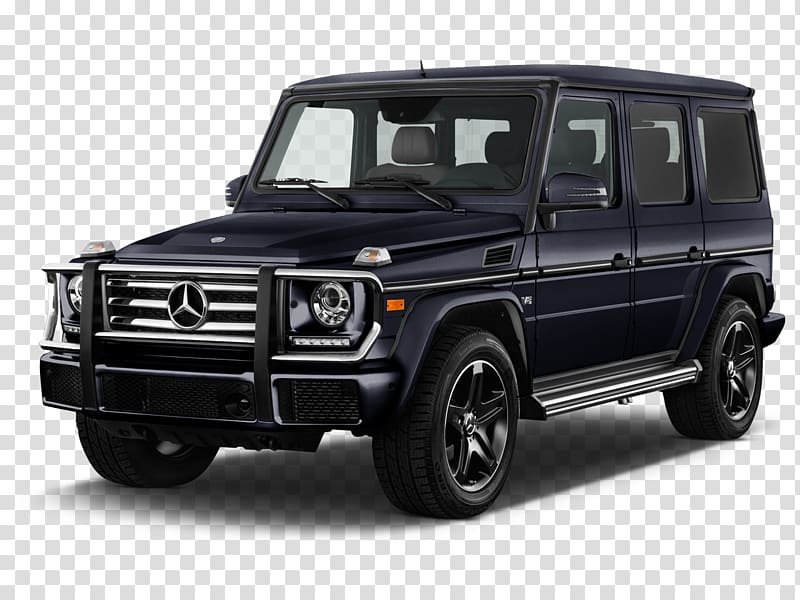
Some vehicles are defined by their spec sheets. The Mercedes-Benz G-Class is defined by something harder to manufacture — character. In a world where every luxury SUV looks broadly similar, the G-Wagon remains stubbornly, magnificently itself. The same boxy silhouette. The same three locking differentials. The same unapologetic proportions that made it recognisable in 1979 and unmistakable today.
This guide covers everything about the 2026 Mercedes-Benz G-Class — history, design, powertrains including the electric G 580, interior, off-road capability, pricing, and an honest take on who should buy it.
Table of Contents
- From Military Workhorse to Global Icon
- Design and Exterior: 45 Years and Still Turning Heads
- Interior: Where Luxury Meets Rugged Heritage
- Powertrains: G 550, AMG G 63, and G 580 EQ
- Off-Road Capability: Why Nothing Else Quite Matches It
- Safety and Driver Assistance Technology
- Pricing and Variants in 2026
- Ownership Economics and Resale Value
- Honest Pros and Cons
- How It Compares to Rivals
- Who Should Buy the G-Wagon
- Frequently Asked Questions
- Related Posts
From Military Workhorse to Global Icon
The G-Class story begins in the early 1970s with an unusual commission. The Shah of Iran — then a significant Daimler-Benz shareholder — requested a rugged off-road vehicle for military and civilian use. Mercedes partnered with Steyr-Daimler-Puch in Graz, Austria, and after testing across deserts, Arctic terrain, and mountain trails, the first Geländewagen rolled off the production line in 1979.
Early models were strictly utilitarian. The 230G and 280GE were tools built to work. Through the 1980s and 1990s, Mercedes added layers of comfort and refinement, transforming a military truck into something that could credibly park outside a luxury hotel. The W463 generation launched in 1990 marked the pivotal shift toward balancing serious off-road ability with everyday comfort. The current W465 generation adds mild-hybrid technology and the fully electric G 580 while keeping the DNA intact.
More than 45 years after that first production run, the G-Class is still built in Graz. That continuity of manufacture is part of what makes it feel genuinely special rather than simply expensive.
Design and Exterior: 45 Years and Still Turning Heads
The G-Wagon’s design philosophy can be summarised simply: if it works, don’t change it. The upright windscreen, flat roof, squared-off body panels, exposed door hinges, rear-mounted spare tyre, and short overhangs are all still there. What has been refined are the details — modern LED headlights, subtle surfacing updates that acknowledge current tastes without abandoning the character that defines the car.
At over 4,800 mm in length and sitting tall on 19 to 22 inch wheels depending on variant, the G-Wagon commands attention at any speed and in any environment. The three-pointed star grille, prominent wheel arches, and protective body cladding communicate capability clearly. Personalisation through Mercedes’ Manufaktur programme offers matte finishes, exclusive paint colours, carbon fibre accents, and custom interior combinations. AMG variants add wider body kits and quad exhaust tips that shift the character toward performance without losing the essential G-Wagon identity.
Interior: Where Luxury Meets Rugged Heritage
Step inside and the contrast with the exterior is deliberate and satisfying. Premium leather upholstery, open-pore wood or carbon fibre trim, ambient lighting, and Mercedes’ latest MBUX dual-screen infotainment create an environment that feels thoroughly modern and unambiguously premium. The large central touchscreen and fully digital instrument cluster are crisp, responsive, and intuitive.
Multi-contour front seats with massage, ventilation, and heating are standard on upper trims. Rear passengers enjoy generous legroom and headroom, though the high step-in requires a deliberate climb — one of the few reminders of the G-Wagon’s truck origins. The MBUX system responds to natural voice commands, handles navigation and vehicle settings, and improves with regular use. Wireless Apple CarPlay and Android Auto, a Burmester surround sound system, and wireless charging are all present on well-specified models.
The Detail That Tells the Story
One design choice has survived every update unchanged: the grab handle on the passenger side dashboard, originally there for off-road use. In a car that increasingly spends its life on city streets, it serves little practical purpose for most owners. Mercedes keeps it anyway — the kind of detail that separates genuine heritage from vehicles that merely reference it. Cargo space runs from approximately 34 cubic feet behind rear seats to over 68 cubic feet with seats folded.
Powertrains: G 550, AMG G 63, and the Electric G 580
G 550 — 3.0-Litre Inline-6 with Mild Hybrid
Producing approximately 443 horsepower from a turbocharged inline-6 with 48-volt mild-hybrid assistance, the G 550 reaches 60 mph in around 5.3 seconds. The mild-hybrid system improves urban efficiency and reduces engine strain during stop-start cycles. A 9-speed automatic transmission and permanent all-wheel drive complete the setup.
AMG G 63 — 4.0-Litre Biturbo V8
Over 577 horsepower from a 4.0-litre biturbo V8 with mild-hybrid support launches the G 63 to 60 mph in approximately 4.5 seconds — in a vehicle weighing over 2,500 kg. The V8’s exhaust character is a defining feature: deep, complex, and unmistakably AMG. G-Mode optimises off-road settings and adjusts suspension, steering, and drivetrain response for challenging terrain.
G 580 with EQ Technology — The Electric G-Wagon
Four individual electric motors — one per wheel — deliver precisely controlled torque to each corner independently. The G-Turn function rotates the vehicle on its own axis by spinning left and right wheels in opposite directions, a capability never before possible in any G-Class. Wading depth exceeds combustion variants. For buyers wanting zero-emission operation with the full G-Class off-road feature set, the G 580 makes a compelling if expensive case.
Off-Road Capability: Why Nothing Else Quite Matches It
Three fully lockable differentials — front, centre, and rear — are standard across the lineup. Combined with a low-range transfer case, approximately 241 mm of ground clearance, excellent approach and departure angles, and 700+ mm wading depth, the G-Wagon is genuinely capable of terrain that defeats most luxury SUVs. Terrain modes including Rock, Sand, and Trail optimise traction and drivetrain response for different surfaces. Body-on-frame construction absorbs chassis flex on uneven terrain where unibody platforms would flex and stress.
According to a vehicle capability assessment published by the Society of Automotive Engineers, body-on-frame SUVs with three locking differentials outperform unibody luxury SUVs in severe off-road obstacle completion rates across standardised test conditions — confirming what G-Wagon owners already know from real-world experience.
Safety and Driver Assistance Technology
The G-Class carries Mercedes’ comprehensive active and passive safety suite: multiple airbags, autonomous emergency braking, active lane keep assist, adaptive cruise control with stop-and-go function, blind spot monitoring, rear cross-traffic alert, and a 360-degree surround camera system. The MBUX driver assistance package adds semi-autonomous highway driving capability on equipped variants. Active parking assist handles parallel and perpendicular manoeuvres — particularly useful given the G-Wagon’s substantial dimensions in urban environments.
Research published in the European Journal of Transport and Infrastructure Research confirms that vehicles equipped with comprehensive autonomous emergency braking and blind spot monitoring show statistically significant reductions in serious collision rates in both urban and highway conditions.
Pricing and Variants in 2026
The G 550 starts at approximately $155,000 in the United States, rising to around $195,000 and above for the AMG G 63. Fully optioned Manufaktur editions regularly exceed $250,000 to $300,000. The electric G 580 commands a launch premium over the G 550. In India, the G-Class is available as a CBU import with on-road prices in major cities starting above ₹2.5 crore depending on variant and specification.
Ownership Economics and Resale Value
The G-Wagon is one of very few luxury vehicles that consistently holds its value rather than depreciating steeply in the first three years. Strong global demand, limited production, and the timeless design mean well-maintained examples frequently sell close to or above their original purchase price. AMG and Manufaktur variants often command premiums in the secondary market. Running costs are high — premium fuel, specialist servicing, high insurance, and large-format tyre replacement all add up. Mercedes’ standard warranty covers four years or 50,000 miles.
Honest Pros and Cons
What the G-Wagon Does Exceptionally Well
- Unmatched off-road capability with three locking differentials and body-on-frame construction
- Instantly recognisable iconic design with over 45 years of unbroken heritage
- Exceptional resale value — one of the best in the luxury vehicle segment globally
- Opulent, technology-forward interior with MBUX, Burmester audio, and Manufaktur options
- Powerful, characterful powertrains from inline-6 mild hybrid to AMG V8 to full electric
- G 580 electric variant adds unique G-Turn capability and zero-emission operation
- Commanding road presence that no rival quite replicates
Where It Has Room to Improve
- High fuel consumption on combustion variants — mid-teens mpg is typical
- Firm, truck-like ride quality on imperfect urban roads
- High step-in height requires deliberate effort from shorter drivers
- Substantial purchase and operating costs exceed most buyers’ budgets
- Large dimensions make urban parking and tight manoeuvring genuinely challenging
- On-road dynamics feel deliberately agricultural compared to unibody rivals
How the G-Wagon Compares to Rivals
The Land Rover Defender shares utilitarian heritage and serious off-road credentials but offers more modern active technology at a lower price. The Range Rover provides superior on-road refinement and a more cosseting ride but cannot match the G-Wagon’s extreme terrain capability or iconic status. The Cadillac Escalade prioritises American luxury and space over off-road ability. The INEOS Grenadier focuses on pure expedition utility without the luxury premium. None replicates the G-Wagon’s specific combination of military heritage, three locking differentials, hand-built Austrian production, and global cultural recognition.
Who Should Buy the Mercedes G-Wagon in 2026
The G-Wagon suits buyers who want a vehicle that performs credibly off-road and on city streets without choosing between the two. It rewards buyers who value authenticity over novelty, who appreciate a design that hasn’t been chased by trends, and who want something that holds its value, maintains its character, and turns heads consistently throughout the ownership period. Choose the G 550 for the most balanced daily experience. Choose the AMG G 63 if the V8 character is non-negotiable. Choose the G 580 for zero-emission operation and cutting-edge electric capability.
Frequently Asked Questions About the Mercedes-Benz G-Wagon
What is the starting price of the Mercedes G-Wagon in 2026?
The G 550 starts at approximately $155,000 in the US. The AMG G 63 starts around $195,000. Fully optioned examples exceed $250,000 to $300,000. In India, on-road prices start above ₹2.5 crore for the base variant.
How fast is the AMG G 63?
The AMG G 63 reaches 60 mph in approximately 4.5 seconds, powered by a 4.0-litre biturbo V8 producing over 577 horsepower. Top speed is electronically limited to 137 mph (220 km/h).
What makes the G-Wagon good off-road?
Three fully lockable differentials, a low-range transfer case, body-on-frame construction, 241 mm ground clearance, multiple terrain modes, and 700+ mm wading depth give the G-Class genuine capability across mud, rock, sand, and deep water that most luxury SUVs cannot match.
What is the G 580 EQ and how is it different?
The G 580 is the fully electric G-Class with four individual motors per wheel. It features the unique G-Turn tank-rotation capability, superior wading depth, zero local emissions, and competitive range while retaining the full G-Class off-road feature set.
Does the G-Wagon hold its value?
Yes. The G-Class is among the best value-retaining luxury vehicles globally. Well-maintained examples frequently sell close to or above original purchase price. AMG and Manufaktur variants often command premiums in the secondary market due to limited availability and strong demand.
How long has the G-Wagon been in production?
The Mercedes-Benz G-Class has been in continuous production since 1979 — over 45 years — and is still manufactured at the original Steyr-Daimler-Puch facility in Graz, Austria.
Related Posts
- Tata Harrier EV 2026: India’s Most Powerful Electric SUV Reviewed
- Tata Curvv 2026: The SUV-Coupe That’s Rewriting India’s Car Market
- Tata Nexon EV 2026: India’s Most Trusted Electric SUV Reviewed
- Mahindra XUV400 EV 2026: The Electric SUV That Punches Above Its Price
- Tata Tiago EV 2026: India’s Most Affordable Electric Car Reviewed
