
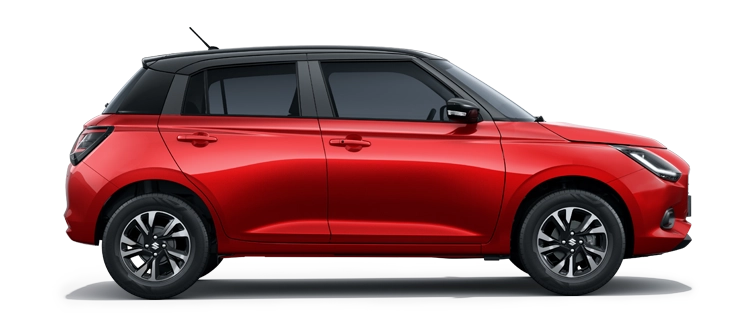
Some cars earn their reputation through specifications. The Maruti Swift earned its reputation through something harder to manufacture — character. Since it launched in India in 2005, the Swift has been the hatchback that people actually enjoy driving rather than merely use. Two decades later, that character is still intact. The fourth-generation model with its Z-series 3-cylinder engine, sharper design, and ARAI efficiency of up to 24.8 kmpl continues to be the benchmark against which every rival hatchback in India is measured.
In 2026, the Swift starts at ₹5.79 lakh, offers petrol, AMT, and CNG options, and remains one of India’s most resale-friendly, lowest-maintenance, most enjoyable-to-drive cars in the under-₹9 lakh bracket. This guide covers everything you need to know.
Table of Contents
- Why the Swift Keeps Winning
- Design and Dimensions
- Engine Options and Real-World Efficiency
- Performance and Driving Experience
- Interior, Comfort, and Features
- Safety Ratings and Technology
- Pricing and Variants in 2026
- Ownership Economics
- Honest Pros and Cons
- How It Compares to Rivals
- Who Should Buy the Swift
- Frequently Asked Questions
- Related Posts
Why the Swift Keeps Winning
The Swift’s longevity as a bestseller in a fiercely competitive segment isn’t primarily about the lowest price — the Tata Tiago and Hyundai Grand i10 Nios often match or beat it on specific specifications. It’s about the total package: a driving experience that feels genuinely engaging for its class, Maruti’s unmatched service network, running costs that stay low across the entire ownership period, and a resale value that makes the Swift one of the most financially rational hatchback purchases in India.
The latest generation brings Suzuki’s Z-series engine — a modern 3-cylinder 1.2-litre unit that is lighter, more fuel-efficient, and smoother than the K-series it replaced. Combined with the Sharp new exterior design, improved interior quality, and a feature list that now includes a 9-inch touchscreen, automatic climate control, and six airbags on higher variants, the 2026 Swift is the most complete version of a genuinely beloved car.
Design and Dimensions
The Swift measures 3,860 mm in length with a 2,450 mm wheelbase — genuinely compact dimensions that make urban parking, lane changes, and tight city navigation a pleasure rather than a stress. The design is the most assertive the Swift has ever been: bold front grille, sleek LED headlamps with signature LED DRLs, sporty bumpers with black accents, a sleek roofline, and connected LED tail lamps. 16-inch alloy wheels on higher variants complete an exterior that reads as sporty and premium without being overdone.
Vibrant colour options including Sizzling Red, Pearl Arctic White, and dual-tone finishes on upper variants appeal to younger buyers who want a car with genuine visual personality. The Swift is one of the few budget hatchbacks that looks genuinely desirable parked on a street rather than merely functional.
Engine Options and Real-World Efficiency
1.2-Litre Z-Series 3-Cylinder Petrol
The new Z-series engine produces approximately 80 to 82 PS and 112 Nm of torque, available with a 5-speed manual or AMT automatic. The 3-cylinder architecture is lighter and more efficient than the 4-cylinder K12 it replaced, with ARAI claimed efficiency of up to 24.8 kmpl (manual) and 25.75 kmpl (AMT). Real-world urban returns of 14 to 17 kmpl and highway returns of 19 to 21 kmpl are the numbers most Swift owners report. Despite the modest output, the Z-series engine’s light weight and responsive low-end character makes the Swift feel more eager than the numbers suggest.
CNG Option
The factory-fitted CNG variant claims ARAI efficiency of up to 32.85 km/kg — making it one of the most economical CNG hatchbacks available. For high-mileage urban commuters in CNG-ready cities, running costs work out to under ₹1.50 per kilometre. The CNG Swift is the most financially compelling choice for buyers in Delhi, Mumbai, Ahmedabad, and similar cities where CNG infrastructure is mature and fuel cost savings compound quickly over time.
Performance and Driving Experience
The Swift’s driving character is the element that sets it apart from most competitors in the segment. It’s not the most powerful, but the combination of a lightweight body, well-tuned suspension, responsive steering, and an engine that’s happily revved makes city driving genuinely enjoyable rather than a chore to be endured. Quick acceleration for urban overtaking, nimble handling around corners, and a composed ride that absorbs Indian road imperfections without crashing through them — the Swift delivers a driving experience that explains why it has maintained loyal owners across two decades.
On highways the Swift is stable and comfortable at 100 to 120 km/h. It’s not a long-distance touring car by nature, but for journeys of 200 to 300 km it handles itself well without the driver fatigue that affects stiffer hatchbacks. The AMT handles urban stop-and-go competently and reduces fatigue in heavy traffic, though the occasional hesitation during upshifts at low speeds is a known characteristic of AMT technology generally.
Interior, Comfort, and Features
The Swift’s cabin is driver-focused and well-considered, if not the roomiest in the segment. The dashboard is clean and modern with a 9-inch touchscreen infotainment system on upper variants, supporting wireless Android Auto and Apple CarPlay. A digital instrument cluster, automatic climate control, push-button start, keyless entry, rear AC vents, and USB Type-C charging ports complete a feature list that covers daily needs without excess.
Front seat occupants get a comfortable, well-bolstered experience. Rear legroom is adequate for shorter adults and children but will feel tight for tall adults on longer journeys — a known characteristic of the Swift’s compact footprint that buyers should evaluate honestly. Boot space of 265 litres is sufficient for daily errands and short trips but will challenge families packing for a week-long holiday. The 60:40 split rear seats expand cargo space when needed.
Safety Ratings and Technology
The latest Swift comes with dual airbags as standard, with up to six airbags on higher variants, alongside ABS with EBD, Electronic Stability Control, hill-hold assist, rear parking sensors, and a rear camera. The Swift received a 3-star Global NCAP rating in recent testing — improved over previous generations but trailing the 5-star scores of the Honda Amaze, Tata Altroz, and Kia Seltos at similar or higher price points.
According to the International Road Assessment Programme (iRAP), electronic stability control — standard on the Swift across all variants — is one of the most effective single active safety features for reducing loss-of-control accidents, particularly relevant for a nimble, lightweight hatchback used in varied urban driving conditions. For buyers for whom NCAP rating is a primary criterion, the Honda Amaze or Tata Altroz offer stronger passive safety credentials at comparable prices.
Pricing and Variants in 2026
The Maruti Swift starts at ₹5.79 lakh (ex-showroom) for the base LXi and extends to approximately ₹8.80 lakh for the top ZXi+ AMT. CNG variants sit within the mid-range. On-road pricing typically adds ₹1 to ₹1.5 lakh depending on state and city. The ZXi represents the best-value mid-range variant, including the 9-inch touchscreen, keyless entry, and most comfort features. The ZXi+ adds alloy wheels and dual-tone colour option at the top.
Ownership Economics
Annual service costs for the Swift are among the lowest in the Indian hatchback segment — typically ₹4,000 to ₹5,000. Maruti’s 4,000+ outlet service network means access to authorised service everywhere in India including the smallest towns. Resale value is consistently strong: well-maintained Swift examples typically sell at 70 to 80% of purchase price after three years, benefiting from sustained demand in the used car market for the Swift’s blend of reliability, running costs, and driving character.
Honest Pros and Cons
Where the Swift Excels
- Most engaging driving character in the budget hatchback segment
- Z-series engine delivering 24.8 kmpl ARAI efficiency
- CNG option at 32.85 km/kg for ultra-low urban running costs
- Lowest annual service costs in the segment at ₹4,000 to ₹5,000
- 70 to 80% resale value retention after three years
- Maruti’s 4,000+ service network covering all of India
- Stylish, sporty design that stands out in the segment
Where It Has Room to Improve
- 3-star Global NCAP rating trails class leaders on passive safety
- Rear legroom is tight for tall adults on longer journeys
- 265-litre boot is limited for family packing needs
- No sunroof on any variant — a gap at this price in 2026
- AMT occasional hesitation at low-speed upshifts in heavy traffic
How the Swift Compares to Rivals
Against the Maruti Baleno, the Swift is more engaging to drive and more compact for urban use; the Baleno is significantly more spacious, more feature-rich, and comes with a heads-up display. Against the Hyundai Grand i10 Nios, the Swift wins on driving dynamics and fuel efficiency; the Grand i10 Nios counters with a slightly larger interior and turbo petrol option. Against the Tata Tiago, the Swift wins on driving character, efficiency, and service network; the Tiago wins on safety ratings and build quality perception. Against the Honda Amaze, the comparison shifts to segment — the Amaze is a sedan with a larger boot and better safety; the Swift is the hatchback for urban agility.
Who Should Buy the Maruti Swift in 2026
The Swift is the right choice for first-time buyers who want a car that feels genuinely enjoyable to drive, daily commuters who prioritise fuel efficiency and easy city navigation, and budget-conscious buyers who want Maruti’s reliability and service network at the lowest possible price. It suits urban professionals who primarily drive alone or with one passenger, buyers who want the CNG option for maximum economy, and anyone for whom the Swift’s iconic reputation and driving character are part of the purchase motivation.
Avoid the Swift if rear passenger comfort on longer journeys is important, if boot space for family luggage is a regular need, if a sunroof is non-negotiable, or if a higher NCAP safety rating is a primary criterion. For those needs, the Maruti Baleno or Honda Amaze are stronger choices.
Frequently Asked Questions About the Maruti Swift
What is the starting price of the Maruti Swift in 2026?
The Maruti Swift starts at ₹5.79 lakh (ex-showroom) for the base LXi petrol manual. The top ZXi+ AMT is priced at approximately ₹8.80 lakh ex-showroom. On-road prices vary by city and state.
What is the real-world mileage of the Maruti Swift?
Real-world mixed urban and highway returns typically land between 14 and 17 kmpl for city use and 19 to 21 kmpl on highways. ARAI claimed efficiency is up to 24.8 kmpl (manual) and 25.75 kmpl (AMT). The CNG variant achieves up to 32.85 km/kg under ARAI conditions.
Does the Maruti Swift have a sunroof?
No. The Maruti Swift does not offer a sunroof on any variant in the current 2026 lineup. Buyers who want a sunroof should consider the Maruti Baleno at a slightly higher price, which offers a sunroof from the Zeta variant.
Is the Maruti Swift good for highway driving?
Yes, for moderate highway distances. The Swift is stable and comfortable at 100 to 120 km/h with good fuel efficiency. For very long-distance highway touring regularly, the larger Baleno or a compact SUV will provide more comfort. For urban-primary users who occasionally cover 200 to 300 km highway journeys, the Swift handles them well.
What is the safety rating of the Maruti Swift?
The latest Maruti Swift earned a 3-star Global NCAP rating. Up to six airbags are available on higher variants, along with ABS, EBD, Electronic Stability Control, and hill-hold assist. For buyers who prioritise a higher NCAP safety rating, the Honda Amaze (5-star) or Tata Altroz (5-star) offer stronger passive safety credentials at comparable prices.
Related Posts
- Maruti Suzuki Baleno 2026: India’s Top Premium Hatchback Reviewed
- Maruti Suzuki Brezza 2026: India’s Best-Selling Compact SUV Reviewed
- Honda Amaze 2026: India’s Safest Sub-Compact Sedan Reviewed
- Tata Tiago EV 2026: India’s Most Affordable Electric Car Reviewed
- Maruti Suzuki Grand Vitara 2026: The Hybrid SUV That Rewrites Running Costs


