
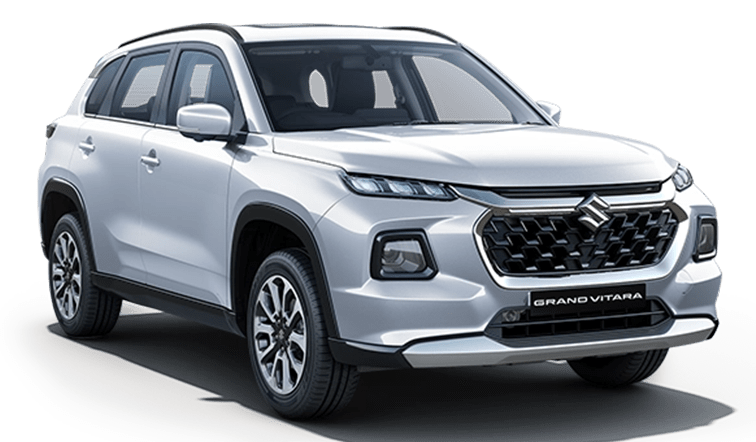
India’s mid-size SUV segment is crowded and fiercely competitive. Every major manufacturer has a strong entry, pricing is aggressive across the board, and the feature lists have converged to the point where most cars in the category feel interchangeable on a spec sheet. The Maruti Suzuki Grand Vitara cuts through that noise with a genuinely differentiated argument: it’s the only SUV in the segment that offers a full strong hybrid powertrain returning nearly 28 kmpl under ARAI testing, with Maruti’s legendary service network behind it and pricing that starts under ₹11 lakh.
This guide covers everything you need to know before buying — all three powertrain options, real-world efficiency, interior quality, safety, pricing, and an honest take on who should buy the Grand Vitara and who might be better served by a rival.
Table of Contents
- Why the Grand Vitara Matters in 2026
- Design and Dimensions
- Three Powertrain Options Explained
- Performance and Driving Experience
- Interior, Comfort, and Features
- Safety Ratings and Technology
- Pricing and Variants in 2026
- Ownership Economics
- Honest Pros and Cons
- How It Compares to Rivals
- Who Should Buy the Grand Vitara
- Frequently Asked Questions
- Related Posts
Why the Grand Vitara Matters in 2026
Maruti Suzuki launched the Grand Vitara in 2022 as its flagship mid-size SUV, developed in collaboration with Toyota and sharing its platform with the Toyota Urban Cruiser Hyryder. The Toyota partnership brought something genuinely new to the segment — a self-charging strong hybrid system that allows the Grand Vitara to run on electric power alone in urban conditions, cutting fuel consumption to levels no petrol-only SUV in the class can match.
Four years into its run, the Grand Vitara has found its buyer. This is the car for the household that calculates total cost of ownership carefully, that covers 1,500 km or more per month, and that wants a premium NEXA experience without paying Toyota or Hyundai prices. It’s not the most exciting SUV in the segment, and it doesn’t try to be. What it does — efficiency, reliability, comfort, and low running costs — it does exceptionally well.
The 2026 lineup adds incremental refinements including six standard airbags across all variants, improved infotainment responsiveness, and additional connected car features that keep it competitive against the Hyundai Creta and Kia Seltos in everyday use.
Design and Dimensions: Contemporary SUV Presence
The Grand Vitara measures approximately 4,345 mm in length with a 2,600 mm wheelbase — compact enough to handle urban traffic competently, spacious enough to seat five adults in genuine comfort. Ground clearance of 210 mm is well-suited to Indian road conditions, giving it the ability to handle flooded streets, broken urban surfaces, and occasional light trail driving without concern.
The exterior styling is contemporary and cohesive without being dramatic. Sleek LED headlights, a wide front grille, muscular wheel arches, roof rails, and alloy wheels between 16 and 17 inches create a confident profile that reads as premium under the NEXA banner. Dual-tone colour options with contrasting roofs are available on higher trims and add meaningful visual appeal. The overall design ages gracefully — it doesn’t rely on aggressive styling that dates quickly, which suits the Grand Vitara’s positioning as a practical long-term ownership choice.
Three Powertrain Options Explained
1.5-Litre Mild-Hybrid Petrol
The mild-hybrid petrol produces around 103 PS and is available with a 5-speed manual or 6-speed automatic transmission. Suzuki’s Smart Hybrid system adds a 12-volt belt-integrated starter-generator that provides mild electric assist during acceleration and smooths engine stop-start in traffic. ARAI fuel efficiency sits around 20 to 21 kmpl, with real-world mixed returns typically landing at 15 to 17 kmpl. This is the most accessible Grand Vitara powertrain and the right choice for buyers who want the full feature set at a lower entry price without the hybrid premium.
1.5-Litre Strong Hybrid (Petrol-Electric)
This is the Grand Vitara’s standout proposition. The Toyota-sourced strong hybrid system combines a 1.5-litre petrol engine with a dedicated electric motor and a small battery pack, delivering a combined output of approximately 116 PS with an e-CVT transmission. The system can run in pure electric mode at low speeds in urban traffic, dramatically reducing fuel consumption where it matters most.
ARAI claimed efficiency reaches up to 27.97 kmpl — a figure that no petrol-only SUV in the segment can approach. Real-world urban returns for strong hybrid owners typically land between 20 and 25 kmpl, with city-heavy driving sometimes exceeding even that range. For a buyer covering 1,500 km per month, the fuel saving versus a comparable petrol SUV can reach ₹3,000 to ₹5,000 monthly, making the strong hybrid’s price premium financially recoverable within two to three years of ownership.
1.5-Litre CNG
The factory-fitted CNG variant is available with manual transmission and delivers ARAI efficiency of up to 26.6 km/kg. For high-mileage urban commuters in CNG-ready cities, running costs work out to less than ₹1.5 per kilometre — making this the lowest operating cost Grand Vitara in the right conditions. Power output is slightly lower than petrol, but adequate for typical urban and moderate highway use. Boot space is reduced by the CNG cylinder, which is worth factoring in for buyers who need maximum cargo capacity.
Performance and Driving Experience
The Grand Vitara’s character is comfort-focused and relaxed rather than sporty. The strong hybrid variant is particularly impressive in urban conditions — the electric motor’s instant torque delivers smooth, seamless acceleration from a standstill, and the transition between electric and petrol power is virtually imperceptible to most drivers. In city traffic, the Grand Vitara strong hybrid is one of the most refined and stress-free driving experiences available in the mid-size SUV class.
On highways, the e-CVT transmission’s rubber-band feel under hard acceleration takes some adjustment, but at cruising speeds the experience is smooth and quiet. The mild-hybrid petrol with the 6-speed automatic feels more conventional and slightly more engaging for drivers who prefer a traditional gear-change feel. Steering is light and well-suited to urban manoeuvring, though it provides limited feedback for drivers who enjoy a more communicative connection with the road.
The suspension is tuned for comfort and absorbs urban road imperfections well. The 210 mm ground clearance adds confidence on broken surfaces and occasional rural detours. AWD is available on select strong hybrid variants, adding traction on wet roads and light trail driving without the mechanical complexity or weight penalty of a full off-road setup.
Interior, Comfort, and Features
The Grand Vitara’s cabin reflects its NEXA positioning with good material quality, a well-structured layout, and features that feel genuinely useful rather than spec-sheet padding. The 2,600 mm wheelbase translates into comfortable rear legroom for adults, and the front seats provide solid support for longer journeys.
Higher variants include a large touchscreen infotainment system with wireless Android Auto and Apple CarPlay, a head-up display that projects speed and navigation onto the windscreen, a panoramic sunroof, ventilated front seats, a 360-degree camera, automatic climate control, and a premium audio system. The head-up display is a segment-first feature at this price and genuinely useful for keeping eyes on the road during navigation. The panoramic sunroof brightens the cabin considerably and is one of the features buyers most frequently cite as a deciding factor.
Boot space runs from 265 litres in strong hybrid variants (the battery pack occupies some floor space) to 373 litres in the petrol variants. For daily family use the hybrid’s boot is adequate; buyers who regularly need maximum cargo space should choose the petrol variant or factor in roof storage solutions.
Safety Ratings and Technology
The Grand Vitara earned a 4-star Global NCAP safety rating — a meaningful result that places it in the upper tier of the mid-size SUV segment for passive safety. Six airbags are standard across all variants in the 2026 lineup, alongside ABS with EBD, Electronic Stability Control, TPMS, rear parking sensors, and a 360-degree camera on higher trims.
Top variants add ADAS-inspired features including lane departure warning and autonomous emergency braking — bringing the Grand Vitara’s active safety suite into line with more expensive rivals. According to a study published in Traffic Injury Prevention journal, vehicles equipped with autonomous emergency braking show a reduction of up to 38% in rear-end collisions in real-world urban traffic, making these features a meaningful upgrade beyond their marketing value.
The Global New Car Assessment Programme (Global NCAP) notes that the Grand Vitara’s 4-star adult occupant protection score reflects a structurally sound body that manages crash energy effectively — important assurance for families planning long highway journeys where accident risk is inherently higher than in urban driving.
Pricing and Variants in 2026
The Maruti Suzuki Grand Vitara range starts at approximately ₹10.77 lakh (ex-showroom) for the base Sigma mild-hybrid petrol and extends to around ₹19.72 lakh for the top Alpha+ strong hybrid with AWD. CNG variants sit in the mid-range of the lineup. On-road pricing in major cities typically adds ₹1.5 to ₹3 lakh depending on state registration charges, insurance, and accessories.
The strong hybrid’s price premium over equivalent mild-hybrid petrol variants is approximately ₹2 to ₹3 lakh depending on trim level. For high-mileage buyers covering 1,500 km or more per month, this premium is typically recoverable within two to three years through fuel savings. Lower-mileage buyers are better served by the mild-hybrid petrol, where the feature set is comparable and the value proposition is stronger.
Ownership Economics
The Grand Vitara’s ownership economics are genuinely compelling. Maruti’s 4,000+ outlet service network means maintenance access in virtually every Indian city and most towns. Scheduled maintenance costs are predictably low — Maruti parts pricing is among the most accessible in the market. The strong hybrid’s simpler drivetrain than a traditional automatic (the e-CVT has fewer mechanical components than a conventional gearbox) contributes to lower long-term maintenance costs beyond just fuel savings.
Resale value benefits from both the Maruti brand’s strong used-car market demand and the Grand Vitara’s growing popularity as a proven reliable choice. Strong hybrid variants are increasingly sought after in the used car market as fuel price sensitivity grows among Indian buyers. For a five-year ownership cycle, the Grand Vitara strong hybrid competes on total cost of ownership with vehicles priced significantly lower at purchase.
Honest Pros and Cons
Where the Grand Vitara Excels
- Industry-leading strong hybrid efficiency — up to 27.97 kmpl ARAI
- Segment-first head-up display on higher variants
- 210 mm ground clearance for confident Indian road use
- AWD option on select strong hybrid variants
- Six airbags standard and 4-star Global NCAP rating
- Maruti’s 4,000+ outlet service network across India
- Strong resale value and low scheduled maintenance costs
Where It Has Room to Improve
- Strong hybrid boot space reduced to 265 litres due to battery placement
- e-CVT transmission’s rubber-band feel takes adjustment for drivers who prefer geared automatics
- Interior materials quality trails the Hyundai Creta and Kia Seltos at comparable prices
- Not particularly engaging for drivers who enjoy a spirited driving feel
- No diesel option for buyers who prioritise highway torque over hybrid efficiency
- CNG variant boot space further reduced by cylinder placement
How the Grand Vitara Compares to Rivals
Against the Hyundai Creta, the Grand Vitara wins on fuel efficiency — especially with the strong hybrid — and service network breadth, while the Creta counters with a more premium interior feel, more powerful turbopetrol and diesel engines, and stronger brand recognition internationally. Against the Kia Seltos, the dynamics are similar — the Grand Vitara wins on efficiency and running costs; the Seltos wins on interior technology and driving engagement.
The Toyota Urban Cruiser Hyryder shares the Grand Vitara’s platform and strong hybrid system, offering Toyota’s brand reliability at a marginally different price point. For buyers who prioritise Toyota’s service network over Maruti’s, the Hyryder is the natural alternative. The Maruti Suzuki Brezza is the more affordable compact SUV sibling for buyers who find the Grand Vitara’s price stretching beyond their budget.
Who Should Buy the Maruti Suzuki Grand Vitara in 2026
The Grand Vitara is the right choice for urban and semi-urban families covering 1,000 km or more per month who want to minimise running costs while maintaining access to a premium feature set. It suits buyers who calculate total cost of ownership carefully and who value Maruti’s service reliability over every other brand consideration.
Choose the strong hybrid if you cover high monthly mileage, if urban commuting dominates your usage pattern, and if you want the most fuel-efficient petrol SUV in the class. Choose the mild-hybrid petrol for the best value balance of features and running costs if your mileage doesn’t justify the hybrid premium. Choose CNG if you’re in a well-served CNG city and fuel economy is the single most important factor in your decision.
The Grand Vitara is not the right choice for buyers who prioritise a spirited driving experience, those who need maximum boot space in all configurations, or buyers whose primary use involves sustained high-speed highway driving where the strong hybrid’s efficiency advantage over a diesel narrows considerably. For everyone else — particularly the efficiency-focused urban family — it remains one of the most financially intelligent mid-size SUV purchases available in India in 2026.
Frequently Asked Questions About the Maruti Suzuki Grand Vitara
What is the starting price of the Maruti Suzuki Grand Vitara in 2026?
The Maruti Suzuki Grand Vitara starts at approximately ₹10.77 lakh (ex-showroom) for the base Sigma mild-hybrid petrol. The top Alpha+ strong hybrid AWD is priced at around ₹19.72 lakh ex-showroom. On-road prices vary by city and state.
What is the real-world fuel efficiency of the Grand Vitara strong hybrid?
The strong hybrid delivers 20 to 25 kmpl in real-world urban conditions for most owners, with city-heavy driving patterns sometimes exceeding that range. ARAI claimed efficiency is up to 27.97 kmpl. Highway-only efficiency is typically lower at 17 to 20 kmpl as electric assist contribution decreases at sustained speeds.
Is the Maruti Grand Vitara strong hybrid worth the extra cost?
For buyers covering 1,500 km or more per month, the strong hybrid typically pays back its price premium over the mild-hybrid petrol within two to three years through fuel savings. For lower-mileage buyers, the mild-hybrid petrol offers better value. The calculation depends on your monthly mileage and local fuel prices.
Does the Maruti Grand Vitara have AWD?
Yes. AWD is available on select strong hybrid variants of the Grand Vitara. It provides improved traction on wet roads and light trail driving. It is not designed for serious off-road use but adds meaningful confidence in adverse conditions.
How does the Grand Vitara compare to the Hyundai Creta?
The Grand Vitara wins on fuel efficiency (particularly the strong hybrid), service network breadth, and running costs. The Creta wins on interior premium feel, more powerful turbopetrol and diesel options, and stronger international brand recognition. The best choice depends on whether efficiency and service access or interior quality and engine performance matter more to you.
What is the boot space of the Maruti Grand Vitara?
Boot space is 373 litres in petrol and CNG variants. The strong hybrid variant has a reduced boot space of 265 litres due to the battery pack placement under the floor. For buyers who regularly need maximum cargo capacity, the petrol variant is the more practical choice.
Related Posts
- Hyundai Creta 2026: Complete Review and Buying Guide
- Kia Seltos 2026: The Compact SUV That Refuses to Compromise
- Maruti Suzuki Brezza 2026: The Compact SUV That Started It All
- Maruti Suzuki XL6 2026: The Premium 6-Seater MPV That Makes Financial Sense
- Tata Nexon EV 2026: India’s Most Trusted Electric SUV Reviewed
