
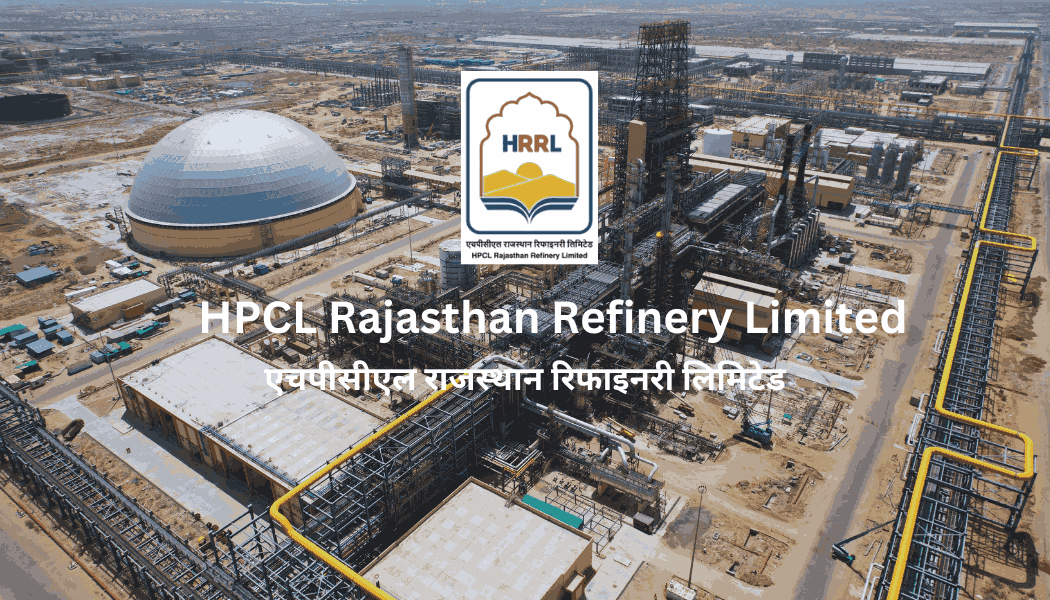
India imports nearly 85% of its crude oil. That dependency is a strategic vulnerability that successive governments have attempted to reduce through domestic production, energy diversification, and refining capacity expansion. The HPCL Rajasthan Refinery Limited — HRRL — is the most substantial single step in that direction in recent years: a ₹70,000 crore greenfield refinery-cum-petrochemical complex in Barmer, Rajasthan, processing 9 million metric tonnes of crude per year, producing BS-VI compliant fuels, and generating petrochemicals that support downstream industries across the manufacturing sector.
Table of Contents
- What Is HRRL
- Why HRRL Matters for India’s Energy Security
- The Petrochemical Dimension
- Technology and Design
- Strategic Location Advantage
- Economic Impact
- Environmental Sustainability
- Project Timeline and Status
- Challenges
- Frequently Asked Questions
- Related Posts
What Is HRRL
HPCL Rajasthan Refinery Limited is a joint venture between Hindustan Petroleum Corporation Limited (HPCL) at 74% and the Government of Rajasthan at 26%. The facility is being constructed at Pachpadra in Barmer district as a fully integrated greenfield refinery and petrochemical complex. The 9 MMTPA processing capacity makes it a large-scale operation by Indian standards. The integrated petrochemical units distinguish it from a pure fuel refinery, generating higher-value products from the same crude input and significantly improving the economics of the plant relative to fuel-only operations.
Why HRRL Matters for India’s Energy Security
India’s refining capacity has expanded significantly over the past two decades, but demand growth has consistently outpaced it. The country relies on imported refined products to meet consumption gaps, which adds foreign exchange burden and supply chain vulnerability. Additional domestic refining capacity at HRRL reduces that dependency by converting domestic crude production from the Barmer Basin — which has been flowing for years but processed elsewhere — into finished products closer to the source. This reduces transportation costs for crude moving to distant refineries and finished products moving back to Rajasthan and surrounding markets.
The ability to process both domestic Rajasthan crude and imported crude gives HRRL operational flexibility — it is not solely dependent on domestic production, which is itself subject to natural decline curves and reservoir management constraints. This blended feedstock approach improves refinery economics and resilience.
The Petrochemical Dimension
The integration of a petrochemical complex alongside the refinery is the feature that most distinguishes HRRL from conventional refinery projects. Petrochemical products derived from crude oil — polypropylene, polyethylene, butadiene, benzene, toluene — have significantly higher value per tonne than fuels and address supply gaps that currently require imports. India’s petrochemical consumption is growing rapidly as manufacturing, packaging, automotive, and textile industries expand. Domestic production from HRRL reduces import dependence in these sectors and provides feedstock for downstream industries that can co-locate in the Barmer industrial ecosystem.
Technology and Design
HRRL is designed around current-generation refinery technology with high energy efficiency targets, advanced emission control systems, and sulfur recovery units. The production of BS-VI compliant fuels — the highest emission standard currently mandated in India — is built into the design from the outset rather than retrofitted, which is more cost-effective and technically superior. The captive power plant, crude and product pipeline infrastructure, water supply systems, and storage facilities are integrated into the project scope, creating a self-sufficient operational unit rather than one dependent on external utilities that may be unreliable in a location as remote as Barmer.
Strategic Location Advantage
Barmer’s proximity to the Barmer Basin oil fields is the primary locational advantage — crude pipelines from producing wells to the refinery are short and avoid the long-haul transport costs that add to the economics of processing Rajasthan crude at distant coastal refineries. The location also places HRRL close to emerging industrial demand in Rajasthan and serves as a supply hub for markets in the northwest that are geographically remote from coastal refinery clusters. The connectivity to port infrastructure for imported crude import capability means HRRL is not constrained to domestic feedstock alone.
Economic Impact
A ₹70,000+ crore investment at this scale creates direct employment in construction and operations, indirect employment across the logistics, maintenance, and service ecosystem, and catalytic effects through downstream industrial development. HRRL is expected to create tens of thousands of direct and indirect jobs. The availability of domestically produced petrochemicals in the region creates conditions for plastics manufacturing, packaging, specialty chemicals, and textile auxiliary industries to locate nearby, building an industrial cluster effect that compounds the economic benefits beyond the refinery itself.
Environmental Sustainability
For a refinery of this scale, the environmental performance targets are substantial. BS-VI fuel production reduces vehicle emissions significantly compared to lower standard fuels still produced at older refineries. Advanced emission control systems and sulfur recovery units reduce atmospheric pollutants from the refinery operations themselves. Energy efficiency investments reduce the carbon intensity of refinery operations per unit of output. The project aligns with India’s commitment under the Paris Agreement to reduce the emissions intensity of its GDP while meeting energy needs for economic development — a combination that requires more efficient energy infrastructure rather than simply less of it.
Project Timeline and Status
The HRRL joint venture was formed in 2013. The foundation stone was laid in January 2018. Construction was significantly disrupted by COVID-19 from 2020 onwards, affecting labour availability, supply chains, and commissioning schedules. Project cost has escalated from original estimates due to inflation, delays, and scope refinements. As of 2026, the project is in its advanced completion phase, with commissioning of individual units progressing and full operational commencement expected in the near term. Updates on the commissioning schedule are available through HPCL’s official investor communications.
Challenges
The project’s prolonged execution timeline — from 2018 foundation stone to 2026 commissioning phase — reflects challenges common to mega infrastructure projects in India: regulatory and approval delays, land acquisition complexities, labour mobilisation in remote locations, supply chain disruptions during the pandemic, and cost escalation from global inflation in materials and equipment. Managing the interface between HPCL’s operational engineering norms and the Rajasthan government’s participation requirements has added governance complexity. These challenges are being navigated, and the project’s strategic importance has ensured continued political and financial support through the difficulties.
Frequently Asked Questions About HRRL
What does HRRL stand for?
HRRL stands for HPCL Rajasthan Refinery Limited. It is a joint venture between Hindustan Petroleum Corporation Limited (74%) and the Government of Rajasthan (26%), developing a 9 MMTPA integrated refinery and petrochemical complex at Pachpadra, Barmer.
What is the project cost of HRRL?
The HRRL project cost exceeds ₹70,000 crore. Cost has escalated from original estimates due to project delays, COVID-19 disruptions, and global inflation in materials and equipment costs.
What makes HRRL different from conventional refineries?
HRRL integrates a petrochemical complex alongside the fuel refinery, producing polypropylene, polyethylene, benzene, and other petrochemicals in addition to BS-VI compliant fuels. This integration significantly improves the economics and strategic value of the project compared to a fuel-only refinery of equivalent scale.
