
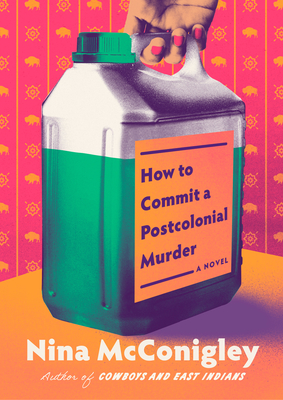
Nina McConigley’s short fiction has always worked in the space between cultures — not the dramatic collision of two worlds, but the quieter, more persistent negotiation that people with hybrid identities conduct every day, often invisibly. How to Commit a Postcolonial Murder is a collection that operates in that space with particular precision. The title is deliberately provocative in a way that the stories themselves are not: the violence referenced is not physical but cultural and historical, the murder not literal but metaphorical — the erasure of origin, the suppression of self, the slow sacrifice that assimilation demands.
Table of Contents
- Literary and Cultural Context
- Central Themes
- Narrative Style and Technique
- Characterisation and Psychological Depth
- Postcolonial Framework
- Verdict: Who Should Read It
- Frequently Asked Questions
- Related Posts
Literary and Cultural Context
McConigley writes from a position of genuine cultural hybridity — her background connects India and the American West, two places with very different but equally strong claims on identity. This positioning is not incidental to the work; it is the work’s central resource. The collection sits within a tradition of postcolonial short fiction that includes writers like Jhumpa Lahiri, Chimamanda Ngozi Adichie, and Yiyun Li, all of whom use the compressed form of the short story to explore how history inhabits the present through individual lives.
What distinguishes McConigley’s approach is her refusal to explain. The cultural references, the layered histories, the tensions between characters — they are presented rather than glossed. This demands more from readers but rewards them with the sense of being inside an experience rather than observing it from a comfortable analytical distance.
Central Themes
Identity formation within multicultural contexts is the collection’s most sustained concern. Characters exist between worlds — neither fully rooted in one cultural framework nor entirely detached from another. This is not presented as a comfortable plurality but as an ongoing negotiation that carries real psychological and social costs. The fluidity of identity is not celebrated uncritically; it is examined with the kind of honesty that acknowledges the price of cultural transition.
The legacy of history operates as an active presence throughout — not as background but as something characters carry in their bodies, their speech patterns, their instinctive responses to situations. Postcolonial inheritance here means being shaped by events and structures that pre-date the individual’s experience but still determine it. Power structures operate quietly in these stories — through social expectations, institutional assumptions, and the thousand small signals that tell certain people they are not quite where they belong.
Narrative Style and Technique
The restraint of McConigley’s prose is its most immediately apparent quality. There is no decorative excess, no surplus explanation, no reaching for emotional effects beyond what the situations themselves generate. The writing is precise and economical in the way that only writers who are genuinely confident in what they’re doing can manage — saying less because they trust the reader to do more.
The fragmented, episodic structure of the collection is thematically appropriate. Memory is fragmented; identity is episodic; cultural inheritance is not a continuous narrative but a series of moments of recognition, resistance, and accommodation. The individual stories function as independent narrative units while the thematic connections between them create cumulative resonance.
Characterisation and Psychological Depth
The characters here are not types or vehicles for thematic illustration. They are psychologically specific people whose cultural situations generate real internal complexity rather than providing symbolic convenience. McConigley is particularly good at capturing the way cultural tension manifests in small, apparently ordinary interactions — the hesitation before answering a question about where someone is from, the calculation that happens before deciding how much of oneself to make visible in a given context.
Postcolonial Framework
Readers with familiarity with postcolonial theory — Bhabha’s hybridity, Said’s Orientalism, Spivak’s subaltern — will find the collection in productive dialogue with these frameworks without being reducible to any of them. McConigley does not write from a theoretical position; she writes from experience, and the theoretical resonances are the result of that experience being accurately rendered rather than strategically deployed. This makes the collection more valuable for classroom use than works that are too deliberately theoretical to feel lived.
Verdict: Who Should Read It
This collection is best suited to readers who are comfortable with ambiguity and resistant to easy resolution — who can sit with a story that ends without clarifying everything and find that more interesting than a story that does. Readers with personal experience of diaspora or cultural hybridity will find their own experiences reflected and complicated. Readers without that direct experience will find it a rare opportunity to inhabit perspectives that are rarely rendered this precisely in fiction. Academic readers in postcolonial studies, cultural studies, or American literature will find it richly useful.
Frequently Asked Questions
What is How to Commit a Postcolonial Murder about?
It is a short story collection by Nina McConigley exploring diaspora identity, cultural hybridity, and the legacy of colonial history through psychologically precise narratives. The title is metaphorical — the murder in question is cultural and historical rather than literal.
Is this collection suitable for academic study?
Yes. It engages productively with postcolonial theory, cultural studies, and diaspora literature frameworks without being reducible to any single theoretical approach. It is useful for courses in postcolonial literature, American literature, and short fiction.
