Introduction
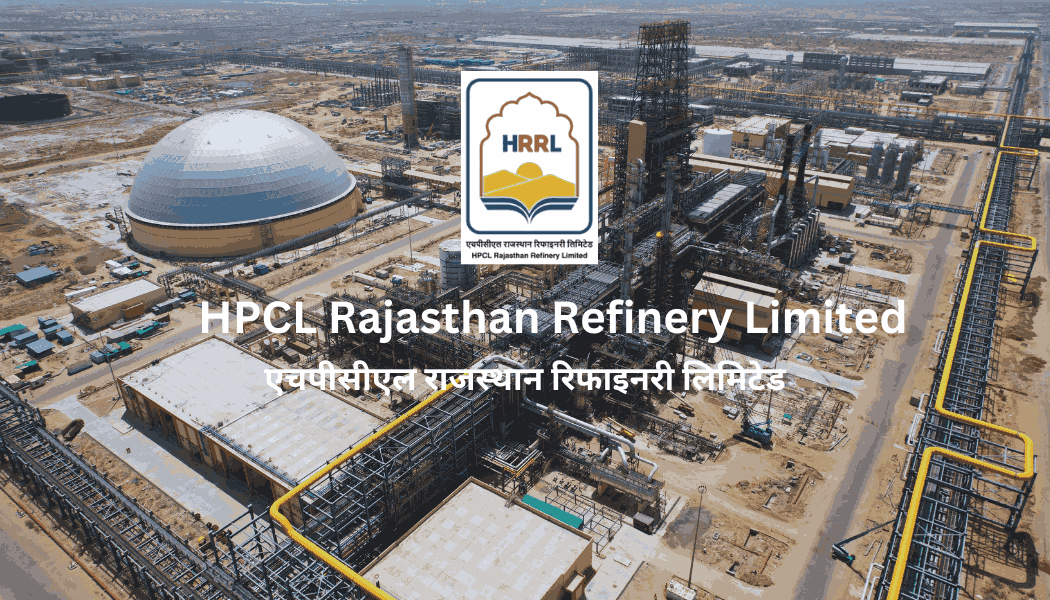
India’s rapid economic expansion demands a strong and resilient energy infrastructure. One of the most ambitious projects addressing this need is the HPCL Rajasthan Refinery Limited (HRRL)—a state-of-the-art 9 MMTPA greenfield refinery-cum-petrochemical complex located in Barmer.
This mega project is not just a refinery—it is a strategic initiative designed to enhance India’s energy security, boost domestic petrochemical production, and catalyze regional economic development.
In this blog, we explore everything about HRRL, including its features, significance, economic impact, and future potential.

What is HPCL Rajasthan Refinery Limited (HRRL)?
The HPCL Rajasthan Refinery Limited (HRRL) is a joint venture between:
- Hindustan Petroleum Corporation Limited (HPCL) – 74% stake
- Government of Rajasthan – 26% stake
It is being developed as a greenfield refinery, meaning it is constructed from scratch rather than expanding an existing facility.
Key Highlights
- Capacity: 9 Million Metric Tonnes Per Annum (MMTPA)
- Project Cost: ₹70,000+ crore
- Location: Pachpadra, Barmer
- Type: Integrated refinery and petrochemical complex
- Expected Commissioning: Near completion phase
The refinery is strategically located close to Rajasthan’s oil fields, enabling efficient processing of locally produced crude oil.
Why HRRL is a Game-Changer for India
1. Strengthening India’s Energy Security
India imports a significant portion of its crude oil. HRRL helps reduce dependency on imported refined fuels by increasing domestic refining capacity.
By processing both domestic crude (Barmer basin) and imported crude, HRRL ensures a diversified and stable energy supply.
2. Value Addition to Domestic Crude Oil
Rajasthan produces crude oil, but without local refining, the economic value is limited. HRRL enables:
- Local processing of crude oil
- Higher value output (fuels + petrochemicals)
- Reduced transportation costs
This enhances the overall efficiency of India’s energy value chain.
3. Boost to India’s Petrochemical Industry
One of HRRL’s biggest advantages is its integrated petrochemical complex.
It will produce:
- Polypropylene (PP)
- Polyethylene (PE)
- Butadiene
- Benzene and Toluene
These materials are essential for industries like:
- Plastics manufacturing
- Packaging
- Textiles
- Automotive
With rising demand for petrochemicals in India, HRRL plays a crucial role in reducing imports and supporting domestic manufacturing.
Advanced Technology and Design
HRRL is designed as a next-generation refinery, incorporating advanced technologies for efficiency and sustainability.
Energy Efficiency
The refinery uses modern systems to minimize energy consumption and operational costs, making it environmentally and economically sustainable.
BS-VI Fuel Production
HRRL will produce BS-VI compliant fuels, which significantly reduce vehicle emissions and contribute to cleaner air.
Integrated Infrastructure
The project includes:
- Crude oil pipelines
- Product pipelines
- Water supply systems
- Captive power plant
- Storage and distribution facilities
This integrated setup ensures seamless operations and cost efficiency.
Strategic Location Advantage
The location of HRRL in Barmer provides several advantages:
- Proximity to Rajasthan oil fields
- Reduced logistics costs
- Faster crude oil processing
- Regional industrial development
Additionally, connectivity to ports ensures access to imported crude oil when needed.
Economic Impact of HRRL
1. Massive Investment and Growth
With an investment exceeding ₹70,000 crore, HRRL is one of India’s largest industrial projects. It contributes significantly to:
- Infrastructure development
- Industrial expansion
- Regional GDP growth
2. Employment Generation
HRRL creates thousands of jobs across multiple sectors:
- Direct employment in refinery operations
- Indirect jobs in logistics, maintenance, and services
- Opportunities for local businesses
3. Development of Industrial Ecosystem
The availability of petrochemicals encourages downstream industries such as:
- Plastic manufacturing units
- Textile industries
- Chemical processing plants
This leads to the creation of a robust industrial ecosystem in Rajasthan.
Environmental Sustainability
Despite being a large industrial project, HRRL incorporates several environmentally friendly measures:
- Advanced emission control systems
- Sulfur recovery units
- Energy-efficient processes
- Production of cleaner fuels
These initiatives align with India’s commitment to sustainable development.
Project Timeline and Current Status
The HRRL project has progressed through several phases:
- 2013: Joint venture formation
- 2018: Foundation stone laid
- 2020–2022: Construction challenges due to COVID-19
- 2025–2026: Near completion and commissioning stage
The project is now in its final stages and expected to begin operations soon.
Challenges Faced by HRRL
Like any mega project, HRRL faced multiple challenges:
Policy and Approval Delays
Initial delays occurred due to financial and policy-related issues.
Pandemic Disruptions
COVID-19 impacted labor availability and supply chains.
Cost Escalation
The project cost increased due to delays and global economic factors.
Despite these challenges, the project has maintained steady progress.
HRRL vs Traditional Refineries
| Feature | Traditional Refineries | HRRL |
| Focus | Fuel production | Fuel + Petrochemicals |
| Technology | Conventional | Advanced |
| Efficiency | Moderate | High |
| Environmental Standards | Lower | BS-VI compliant |
HRRL represents the future of refining in India.
Future Outlook
The future of HRRL looks highly promising due to:
- Growing demand for fuel in India
- Increasing petrochemical consumption
- Strategic location advantages
- Government support
As India moves toward becoming a global manufacturing hub, HRRL will play a key role in supporting industrial growth.
The HPCL Rajasthan Refinery Limited (HRRL) is a landmark project that combines scale, technology, and strategic importance.
It is not just enhancing India’s refining capacity but also:
- Strengthening energy security
- Boosting petrochemical production
- Driving regional development
As the refinery becomes operational, it will mark a significant milestone in India’s journey toward energy independence and industrial growth.