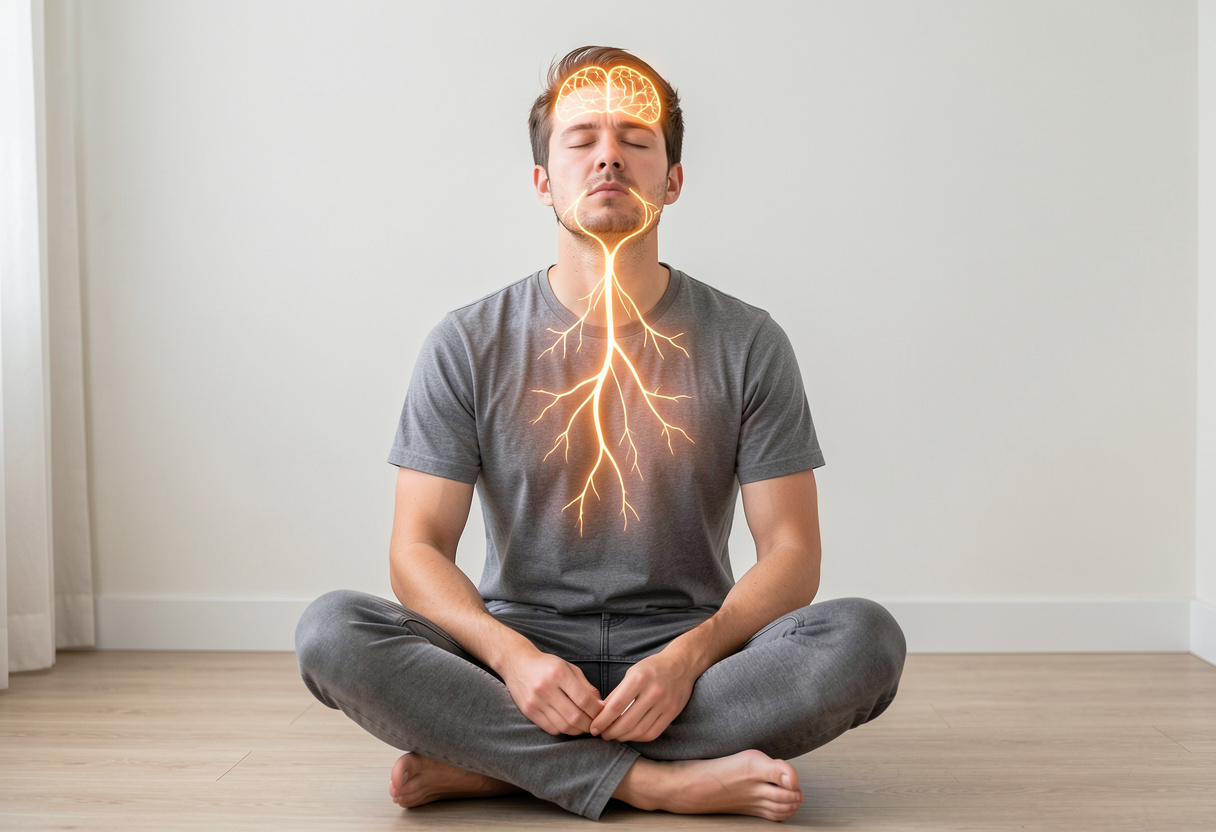
Anxiety is one of the most common mental health challenges worldwide. Many people experience racing thoughts, rapid heartbeat, shallow breathing, muscle tension, and difficulty sleeping. While therapy and medication are effective options for many individuals, there is growing interest in natural anxiety relief methods that can be practiced at home.
One of the most promising approaches involves stimulating the vagus nerve. Research in nervous system regulation shows that improving vagal tone can help the body shift out of fight-or-flight mode and into a calmer, more balanced state.
In this in-depth guide, you will learn:
- What the vagus nerve is
- How the vagus nerve affects anxiety
- The best vagus nerve exercises for anxiety
- How to stimulate the vagus nerve naturally at home
- A simple daily routine to improve vagal tone
This article is educational in nature and not a substitute for medical advice.
What Is the Vagus Nerve?
The vagus nerve is the longest cranial nerve in the body. It begins in the brainstem and travels down through the neck into the chest and abdomen, connecting to major organs such as the heart, lungs, and digestive tract.

It plays a central role in the autonomic nervous system, particularly the parasympathetic branch. The parasympathetic nervous system is often referred to as the “rest and digest” system because it helps the body relax, recover, and repair.
When the vagus nerve is functioning well:
- Heart rate slows down
- Breathing becomes deeper and steadier
- Digestion improves
- Inflammation decreases
- The body feels safe and calm
When vagal tone is low, the body may stay stuck in a stress response. This can contribute to chronic anxiety symptoms.
How the Vagus Nerve Affects Anxiety
Anxiety activates the sympathetic nervous system, also known as the fight-or-flight response. This response is designed to protect you from danger, but when it becomes chronic, it can lead to:
- Rapid heartbeat
- Shallow breathing
- Tight muscles
- Digestive issues
- Increased cortisol levels
The vagus nerve works in the opposite direction. It sends signals to the body that it is safe to relax. This calming pathway is essential for emotional regulation.
Vagal tone refers to how effectively the vagus nerve communicates between the brain and body. Higher vagal tone is associated with:
- Better stress resilience
- Improved emotional control
- Reduced anxiety
- Improved heart rate variability
- Better sleep quality
The encouraging news is that vagal tone can be improved with consistent practice of specific exercises.
Benefits of Vagus Nerve Stimulation for Anxiety
Learning how to stimulate the vagus nerve naturally may help:
- Reduce panic symptoms
- Lower resting heart rate
- Improve digestion
- Enhance mood stability
- Improve sleep
- Increase overall relaxation
These exercises are simple, accessible, and can be practiced daily without equipment.
10 Best Vagus Nerve Exercises for Anxiety Relief
Below are evidence-based vagus nerve exercises you can practice at home to calm anxiety and regulate your nervous system.
1. Diaphragmatic Breathing
Diaphragmatic breathing, also known as belly breathing, is one of the most effective breathing exercises for anxiety relief.
How to Practice
- Sit or lie in a comfortable position.
- Place one hand on your chest and one on your abdomen.
- Inhale slowly through your nose for four seconds.
- Allow your belly to expand while keeping your chest relatively still.
- Exhale slowly through your mouth for six to eight seconds.
- Repeat for five to ten minutes.
Long, slow exhalations directly stimulate the vagus nerve and activate the parasympathetic nervous system.
2. Humming, Chanting, or Singing
The vagus nerve is connected to the vocal cords and throat muscles. Gentle vibration through humming or chanting stimulates this pathway.
How to Practice
- Hum steadily for 30 to 60 seconds.
- Chant a calming sound slowly.
- Sing softly.
- Gargle with water for 30 seconds.
The vibration increases parasympathetic activity and promotes relaxation.
3. Cold Water Face Stimulation
Cold exposure triggers the diving reflex, which slows the heart rate and activates the vagus nerve.
How to Practice
- Splash cold water on your face for 20 to 30 seconds.
- Alternatively, place your face in a bowl of cool water briefly.
This method can quickly reduce acute anxiety symptoms.
4. Progressive Muscle Relaxation
Physical tension reinforces mental stress. Progressive muscle relaxation reduces tension and signals safety to the nervous system.
How to Practice
- Start at your feet and tense the muscles for five seconds.
- Release and notice the relaxation.
- Move upward through the legs, abdomen, shoulders, and jaw.
- Pair each release with slow breathing.
This exercise helps reset the nervous system and reduce anxiety.
5. Gentle Neck Movements
Because the vagus nerve travels along the neck, gentle movements may support regulation.
How to Practice
- Slowly tilt your head side to side.
- Gently rotate your head left and right.
- Hold each stretch for 10 to 15 seconds.
Avoid sudden or forceful movements.
6. Loving-Kindness Meditation
Positive emotional states strengthen vagal tone.
How to Practice
Sit quietly and repeat phrases such as:
- May I be safe.
- May I be calm.
- May I be healthy.
Then extend these wishes to others. Practicing for five minutes daily may reduce anxiety over time.
7. Eye Movement Regulation Exercise
This polyvagal-informed technique supports nervous system balance.
How to Practice
- Keep your head still.
- Look as far to the right as possible and hold your gaze.
- Wait for a natural swallow, sigh, or sense of relaxation.
- Repeat on the left side.
This may help shift the body out of stress mode.
8. Laughter and Social Connection
Genuine laughter stimulates the vagus nerve and increases heart rate variability.
Ways to incorporate laughter:
- Watch a comedy program.
- Talk with a close friend.
- Engage in playful activities.
Social engagement is deeply linked to vagal health.
9. Gentle Yoga and Stretching
Slow, mindful movement combined with breath supports parasympathetic activation.
Helpful poses include:
- Child’s pose
- Legs up the wall
- Cat-cow stretch
Focus on steady breathing during movement for maximum benefit.
10. Consistent Sleep Routine
Sleep deprivation weakens nervous system regulation. Improving sleep supports vagal tone.
Tips include:
- Going to bed at the same time nightly
- Reducing screen exposure before bed
- Limiting caffeine late in the day
- Creating a calming nighttime routine
Good sleep strengthens emotional resilience.
A Simple 10-Minute Daily Vagus Nerve Routine
You do not need to practice all exercises daily. Consistency with a few techniques is enough.
Morning Routine (5 Minutes)
- Three minutes diaphragmatic breathing
- One minute humming
- One brief cold water splash
Evening Routine (5 Minutes)
- Three minutes progressive muscle relaxation
- Two minutes loving-kindness meditation
Practicing daily for several weeks can gradually improve vagal tone and anxiety symptoms.
How Long Does It Take to See Results?
Some techniques, such as breathing exercises or cold water stimulation, may reduce anxiety within minutes.
For long-term improvement in vagal tone:
- Practice consistently for two to four weeks.
- Combine exercises with healthy lifestyle habits.
- Track improvements in mood, sleep, and stress response.
Nervous system regulation is gradual but measurable with consistency.
Signs Your Vagus Nerve Is Improving
You may notice:
- A slower resting heart rate
- Reduced panic episodes
- Improved digestion
- Better sleep quality
- Increased emotional stability
- Faster recovery from stress
These changes indicate improved nervous system balance.
Lifestyle Habits That Support Vagus Nerve Health
In addition to vagus nerve exercises for anxiety, supportive lifestyle habits include:
- Regular walking or light exercise
- Omega-3 rich foods
- Strong social relationships
- Sunlight exposure
- Balanced gut health
The vagus nerve connects the brain and digestive system, so supporting gut health may positively influence anxiety levels.
Frequently Asked Questions
What is the fastest way to calm the vagus nerve?
Slow diaphragmatic breathing with long exhalations is often the fastest method. Cold water face stimulation may also provide rapid relief.
Can vagus nerve exercises stop panic attacks?
These techniques may reduce intensity and duration, but severe or frequent panic attacks require professional evaluation.
How often should I stimulate the vagus nerve?
Daily practice is recommended. Even five to ten minutes per day can improve vagal tone over time.
Final Thoughts
Understanding how to stimulate the vagus nerve naturally gives you a powerful tool for managing anxiety at home. The vagus nerve plays a critical role in calming the body, improving emotional regulation, and restoring balance to the nervous system.
By practicing simple techniques such as diaphragmatic breathing, humming, cold water stimulation, progressive muscle relaxation, and mindful movement, you can gradually improve vagal tone and reduce anxiety symptoms.
Consistency is more important than intensity. A few minutes each day can make a meaningful difference in how your body responds to stress.
If anxiety symptoms are severe, persistent, or interfering with daily life, consult a qualified healthcare professional for guidance.