
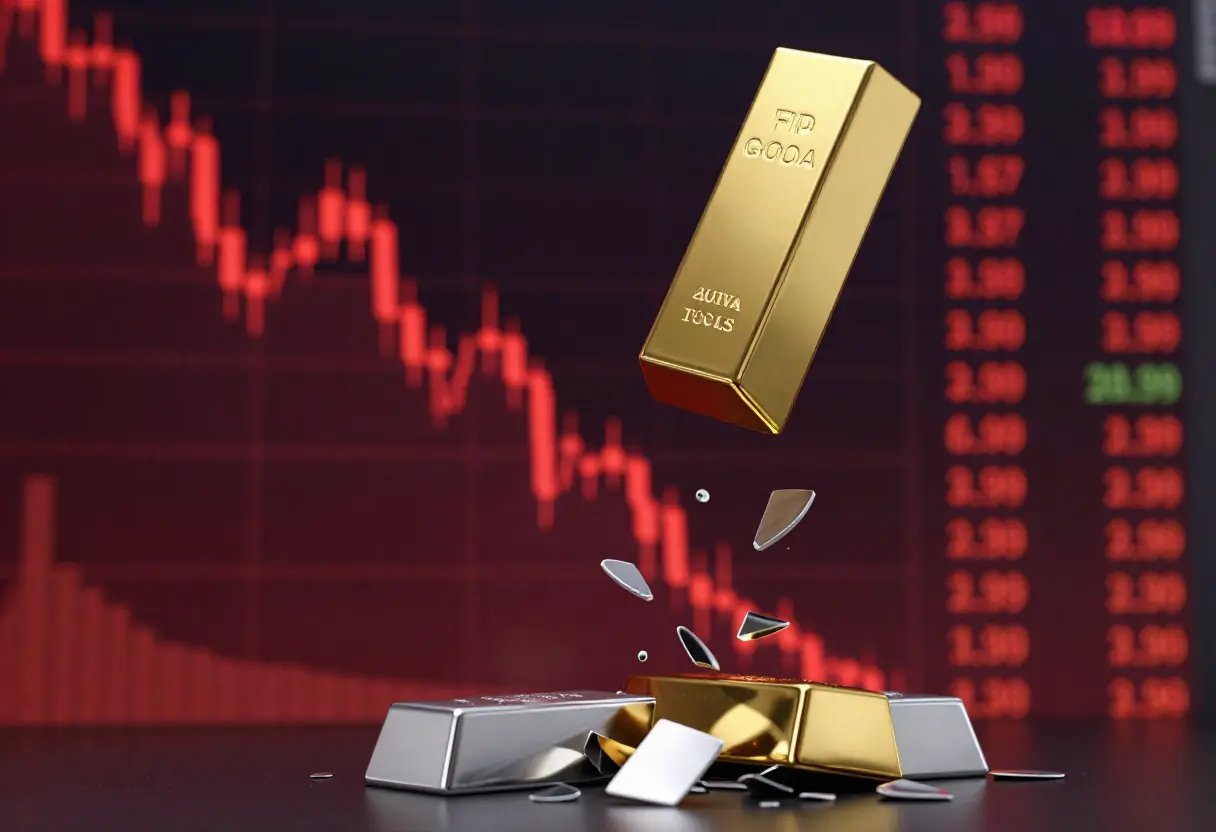
Gold and silver have long been considered classic safe-haven assets, widely used by investors to protect wealth during inflationary periods, currency depreciation, geopolitical tensions, and financial market instability. However, despite this defensive reputation, January 2026 delivered a major shock to global and Indian investors when both metals experienced a sharp and sudden correction after touching record highs.
Within just a few trading sessions, weeks of consistent gains were erased. The gold price crash of 2026 and the steep silver price fall triggered panic selling among retail investors, heavy volatility in futures markets, and intense debate among analysts about whether this was a healthy correction or the beginning of a deeper bearish cycle.
This gold and silver market analysis breaks down the fundamental, technical, psychological, and macroeconomic reasons behind the crash and explores the outlook for investors navigating this highly volatile phase.
Table of Contents
Understanding the Gold and Silver Price Crash
What Does a Crash Mean in the Commodities Market?
A commodity crash refers to a rapid and high-volume price decline over a short time period, often driven by a sudden shift in sentiment, liquidity conditions, or macroeconomic triggers. In precious metals, crashes typically occur after extended rallies when markets become overextended and overly dependent on bullish positioning.
Common drivers include:
- Aggressive profit booking by institutional investors
- Strengthening of the US dollar
- Rising interest rates and bond yields
- ETF redemptions and forced liquidation
- Breakdown of key technical support levels
- Panic-driven retail selling and algorithmic trading triggers
While silver is naturally more volatile due to its dual role as both an industrial and investment metal, even gold—traditionally considered the “ultimate safe asset”—can experience sharp corrections when macro conditions shift rapidly.
In this case, the crash followed an exceptionally strong rally, making the market structurally vulnerable to a sudden reversal.
Price Movement Snapshot (India – January 2026)
The price action in India during late January 2026 reflected extreme volatility in the MCX market, with sharp intraday swings and rapid reversals.
29 Jan 2026: Gold ~₹1,83,000 (24K per 10g), Silver ~₹4,00,000+ per kg
28 Jan 2026: Gold ~₹1,80,000, Silver ~₹4,00,000
27 Jan 2026: Gold ~₹1,60,000, Silver ~₹3,45,000
26 Jan 2026: Gold ~₹1,59,000, Silver ~₹3,40,000
25 Jan 2026: Gold ~₹1,58,000, Silver ~₹3,35,000
30 Jan 2026: Gold ~₹1,53,000, Silver ~₹3,12,000
This sequence highlights a classic blow-off top followed by a fast correction, especially visible in silver, which saw sharper percentage declines due to its higher volatility and thinner liquidity.
Background: The Rally Before the Fall
Before the correction, gold and silver had experienced one of the strongest multi-week rallies in recent years, supported by a combination of macroeconomic and speculative factors.
1. Global Economic Uncertainty
Persistent geopolitical tensions, slowing global growth, and uncertainty around central bank policy direction pushed investors toward safe-haven assets. Gold, in particular, benefited from its historical role as a crisis hedge.
2. Inflation and Currency Weakness Concerns
High inflation expectations in major economies created fears of long-term currency depreciation. This increased demand for gold as a store of value and inflation hedge.
3. Strong Industrial Demand for Silver
Silver received additional support from structural demand growth in:
- Solar energy installations
- Electric vehicle manufacturing
- Semiconductor and electronics industries
- Renewable energy infrastructure
This dual demand structure (industrial + monetary) amplified silver’s price momentum.
4. Momentum Buying and Speculation
Once gold broke multiple psychological resistance levels, momentum traders and hedge funds increased leveraged long positions. This created a feedback loop where rising prices attracted more buyers, pushing the market into overbought territory.
By the time prices peaked, positioning was heavily skewed, making the market highly vulnerable to liquidation.
Key Reasons Behind the Gold and Silver Crash
1. Aggressive Profit Booking
After record highs, institutional investors began systematically locking in profits. In leveraged futures markets, even moderate selling can trigger cascading liquidations, amplifying downside pressure.
2. Strengthening US Dollar Index
The US dollar plays a critical role in precious metals pricing. A rising dollar:
- Makes gold and silver more expensive for non-US buyers
- Reduces global demand
- Encourages capital flow into dollar-denominated assets
This currency strength was one of the primary external triggers for the crash.
3. Rising Bond Yields and Real Interest Rates
As government bond yields rose, the opportunity cost of holding non-yielding assets like gold increased. Investors began rotating capital into fixed-income instruments offering stable returns.
Higher real interest rates historically tend to be negative for gold prices, and this pattern repeated during the January 2026 correction.
4. ETF Outflows and Forced Selling
Gold and silver exchange-traded funds (ETFs) experienced heavy redemptions during the sell-off. To meet these outflows, fund managers were forced to liquidate physical holdings, increasing market supply and accelerating downward pressure.
5. Silver’s Structural Volatility
Silver experienced a sharper decline than gold due to:
- Lower liquidity compared to gold
- Higher speculative participation
- Strong sensitivity to industrial growth expectations
- Faster reaction to macroeconomic shifts
This makes silver behave more like a hybrid between a commodity and a high-beta financial asset.
Technical Analysis: Warning Signs Before the Crash
From a technical standpoint, several warning signals had already emerged before the correction began.
Overbought Conditions
Momentum indicators such as RSI and stochastic oscillators showed extreme overbought readings, indicating that prices had moved too far too fast without healthy consolidation.
Breakdown of Key Support Levels
Once important support zones were breached:
- Stop-loss orders were triggered automatically
- Algorithmic trading systems accelerated sell orders
- Short-term traders exited positions rapidly
This created a cascading effect that intensified the crash.
Volume Expansion During Decline
A significant spike in trading volumes confirmed that the sell-off was not just retail panic but also institutional distribution. High-volume declines often signal strong trend reversals or major corrections.
Market Impact of the Crash
Global Market Impact
- Sharp increase in commodity market volatility
- Temporary loss of investor confidence in precious metals
- Rotation of capital into equities and fixed-income markets
- Strengthening of the US dollar as a safe asset
Indian Market Impact
- Heavy correction in MCX gold and silver futures
- Mark-to-market losses for leveraged traders
- Decline in gold and silver ETF valuations
- Reduced short-term physical demand from jewellers and consumers
- Increased margin pressure in commodity trading accounts
Investor Behaviour During the Crash
Retail Investors
Many retail participants entered the market near peak levels due to FOMO (fear of missing out). The sudden reversal led to panic selling, often at unfavorable prices, locking in losses.
Traders
Short-term traders faced extreme volatility, with rapid intraday reversals causing stop-loss hits and margin calls. Only disciplined risk management strategies helped avoid major damage.
Long-Term Investors
Long-term investors were less affected emotionally, viewing the correction as a potential accumulation phase rather than a structural breakdown.
Correction or Start of a Long-Term Downtrend?
Why It Still Looks Like a Correction
- Central banks continue increasing gold reserves
- Global debt levels remain structurally high
- Inflation risks have not been fully resolved
- Geopolitical uncertainty continues to support safe-haven demand
Risk Factors for Further Decline
- Sustained US dollar strength
- Higher real interest rates
- Improved global risk sentiment reducing safe-haven demand
- Continued ETF outflows in the short term
Overall, current evidence suggests this is a sharp correction within a larger bull cycle, rather than the beginning of a structural long-term decline, though volatility may persist.
Gold Price Outlook 2026
Gold’s future direction will depend on:
- Central bank monetary policy decisions
- Inflation trajectory across major economies
- US dollar strength or weakness
- Geopolitical developments and risk events
Despite short-term turbulence, gold continues to serve as a strategic hedge in diversified portfolios, especially during periods of financial uncertainty.
Silver Price Outlook 2026
Bullish Structural Drivers
- Expansion of renewable energy sector
- Growth in electric vehicle production
- Rising demand in electronics and AI infrastructure
- Long-term supply constraints in mining
Bearish Cyclical Risks
- Global economic slowdown impacting industrial demand
- High speculative positioning leading to volatility
- Strong correlation with risk-on/risk-off market cycles
Silver is expected to remain significantly more volatile than gold, with sharper moves in both directions.
Investment Strategy After the Crash
- Avoid emotional or panic-driven selling during corrections
- Maintain disciplined asset allocation across asset classes
- Use staggered buying or SIP-style accumulation for long-term exposure
- Align strategy with investment horizon (trading vs long-term investing)
- Focus on risk management rather than short-term prediction
Key Takeaways
- The crash followed an extended and overbought rally phase
- Dollar strength and rising yields were key macro triggers
- ETF outflows and leverage amplified downside volatility
- Silver experienced deeper losses due to higher structural volatility
- Long-term fundamentals for gold and silver remain broadly supportive
- Discipline and patience are more important than timing the market
The gold and silver crash of 2026 highlights a fundamental reality of financial markets: no asset moves in a straight line. Even the strongest bull trends experience sharp corrections when positioning becomes stretched and macro conditions shift.
While the speed of the decline created panic and uncertainty, such corrections are a natural and necessary part of commodity cycles. For informed investors, this phase is less about fear and more about reassessing risk, maintaining discipline, and preparing for the next phase of the precious metals cycle.
Gold & Silver Price Data / Charts
- World Gold Council (Gold market data & insights)
- London Bullion Market Association (LBMA prices & benchmarks)
- TradingView (Live gold & silver charts)
Market Analysis & Macro Data
- Investing.com (Gold & silver news and analysis)
- World Bank Commodity Prices (macro commodity trends)
- Federal Reserve Economic Data (interest rates, USD impact)
